
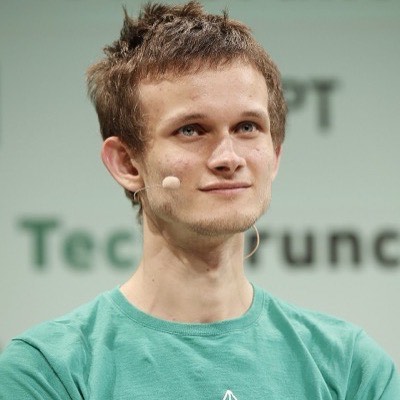
Vitalik Buterin
Co-founder of Ethereum
Proposed and helped build Ethereum, a blockchain designed to run programmable smart contracts, broadening crypto beyond simple payments.
Photo: John Phillips for TechCrunch, CC BY 2.0 · Wikimedia Commons
Biography
Vitalik Buterin, born in Russia in 1994 and raised largely in Canada, is a programmer and writer best known as a co-founder of Ethereum. As a teenager he became involved in the Bitcoin community and co-founded Bitcoin Magazine, writing about cryptocurrencies before starting his own project.
In 2013 he proposed Ethereum in a white paper, suggesting that a blockchain could do more than record payments. Ethereum, which launched in 2015, added programmable smart contracts: code that runs on the network and executes automatically when its conditions are met.
This broadened public blockchains from simple money transfers toward a general platform for decentralized applications, often called dapps. Buterin has remained a leading voice in Ethereum's development, including its 2022 shift from energy-intensive mining to a system called proof of stake.
He writes and speaks frequently about the trade-offs in decentralized systems, especially the balance between decentralization, security, and the ability to handle more activity. He also explores questions of governance: how decentralized communities should make decisions and fund shared work.
Career timeline
- 1994Born in Russia; later grows up in Canada.
- 2011Co-founds Bitcoin Magazine and writes about cryptocurrencies.
- 2013Proposes Ethereum in a white paper.
- 2015Ethereum launches, adding programmable smart contracts.
- 2022Ethereum shifts from mining to proof of stake in an upgrade known as the Merge.
- TodayContinues to write about scaling, governance, and decentralization.
Key ideas
Tap any idea to expand a plain-English explanation, why it matters, and where to learn more.
Smart contracts
Code stored on a blockchain that runs automatically when its conditions are met, without needing a middleman to carry it out.
Smart contracts let people agree on rules in advance and have them enforced by the network, which is the foundation Ethereum is built on.
A smart contract could be written to release funds only after a specific condition is recorded on the blockchain.
Decentralized applications
Apps, often called dapps, that run on a blockchain rather than on servers controlled by a single company.
Running on a shared network means no single company fully controls the app, though this adds complexity and new risks.
Lending, trading, and collectible projects have all been built as decentralized applications on Ethereum.
Ethereum ecosystem
The wide range of projects, tokens, and tools that have been built on top of the Ethereum network.
A large ecosystem can make a network more useful, but it also concentrates a lot of activity and value on one platform.
Many stablecoins and other crypto projects were first built on Ethereum before spreading elsewhere.
Blockchain scaling
The challenge of letting a blockchain handle much more activity without giving up decentralization or security.
Buterin often frames this as a trade-off among three goals at once, where improving one can strain the others.
Newer designs try to process transactions in extra layers so the main network stays secure but can handle more volume.
Governance and decentralization
Questions about how a decentralized community should make decisions, upgrade its software, and fund shared work.
Without a central authority, deciding what changes and who pays for shared infrastructure becomes a hard, ongoing problem.
Major upgrades to Ethereum require many independent participants to agree and adopt the new software.
Major contributions
- Co-founded Ethereum and proposed extending blockchains to run programmable smart contracts.
- Helped move public blockchains beyond payments toward a general platform for decentralized applications.
- Remained a leading voice in Ethereum's development, including its shift to proof of stake.
- Wrote widely about scaling, governance, and the trade-offs of decentralized systems.
Influence on investors
Buterin's work helped launch a large field of smart-contract platforms and decentralized applications that build on, or compete with, Ethereum.
His writing on the trade-offs between decentralization, security, and scale has shaped how many builders and investors discuss blockchains.
Criticisms and debates
A balanced view includes the main criticisms and open debates, presented neutrally.
- Ethereum has faced ongoing debates about scalability, since handling more activity without raising costs is difficult.
- Governance of a decentralized network is complex, and deciding on upgrades can be slow or contested.
- Smart-contract systems add complexity, and bugs in their code have led to real losses.
- Ethereum faces strong competition from other blockchains that promise lower fees or higher speed.
Lessons for investors
Plain-English takeaways. Context for learning, not advice to buy or sell anything.
- 1Programmable blockchains can do more than move payments.
- 2Decentralization, scale, and security involve real trade-offs.
- 3New technology brings new risks alongside new possibilities.
- 4Understand what a system is for before judging how well it works.
Frequently asked questions
Who is Vitalik Buterin?
Vitalik Buterin is a programmer and writer who co-founded Ethereum, a blockchain platform that added programmable smart contracts. He earlier co-founded Bitcoin Magazine.
What is Vitalik Buterin known for?
He is best known for co-founding Ethereum and for proposing that a blockchain could run programmable smart contracts, not just record payments.
What are smart contracts?
Smart contracts are pieces of code stored on a blockchain that run automatically when their conditions are met. They are the foundation for decentralized applications on Ethereum.
How is Ethereum different from Bitcoin?
Bitcoin was designed mainly as digital money, while Ethereum was designed as a general platform that can run programmable smart contracts and decentralized applications.
What are the main debates around Ethereum?
Common debates involve scalability, governance, the complexity of smart contracts, and competition from other blockchains that promise lower fees or higher speed.
Is this page investment advice?
No. This is a neutral educational summary written for learning. It is not financial advice about Ethereum or any crypto asset.
Related learning
Related people


Get smarter about investing
Clear market insights, useful tools, and beginner-friendly investing education.
Educational content only. This is a neutral summary compiled for learning. It is not an endorsement, not investment advice, and not a claim that this person is always right. Mentioning someone here does not imply they are affiliated with Money Masters Media.