

Howard Marks
Co-founder of Oaktree Capital Management
Known for widely read investor memos on risk, market cycles, and the role of psychology in markets.
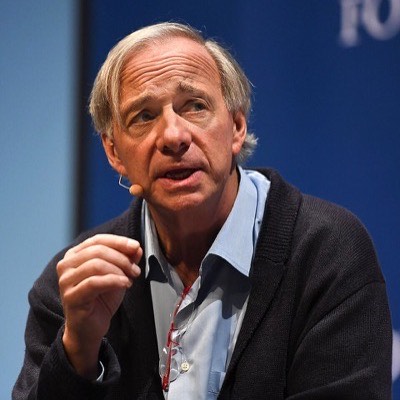
Photo: Kelly Writers House, CC BY 2.0 · Wikimedia Commons
Biography
Howard Marks, born in New York in 1946, is an American investor who co-founded Oaktree Capital Management in 1995. Earlier in his career he ran high-yield bond and distressed-debt strategies at other firms, which shaped his focus on credit, risk, and what can go wrong.
Marks is widely read for the investor memos he has published since 1990. In them he writes about risk, market cycles, and investor psychology, often in plain language and with a willingness to admit what cannot be known in advance.
He argues that controlling risk, rather than chasing the highest possible return, is what separates durable investors from lucky ones. He also stresses second-level thinking: going beyond the obvious view to ask what the crowd may be missing and what is already reflected in prices.
Marks has gathered these ideas in books including The Most Important Thing and Mastering the Market Cycle. He is careful to say that he cannot predict the future, but believes investors can prepare by understanding where the market may sit in its cycle.
Career timeline
- 1946Born in New York.
- 1969Begins his career in investment management.
- 1980sRuns high-yield and distressed-debt strategies, building a risk-focused approach.
- 1990Begins writing his widely read investor memos.
- 1995Co-founds Oaktree Capital Management.
- 2011Publishes The Most Important Thing.
- 2018Publishes Mastering the Market Cycle.
Key ideas
Tap any idea to expand a plain-English explanation, why it matters, and where to learn more.
Risk control
Treating the management of risk, not the pursuit of maximum return, as the central job of an investor.
Avoiding severe losses keeps an investor in the game, and Marks argues that controlling risk is what makes good long-run results repeatable.
Choosing investments where the downside is understood and survivable, rather than reaching for the highest possible payoff.
Market cycles
The idea that markets and economies swing between optimism and pessimism rather than moving in a straight line.
Having a rough sense of where the market sits in its cycle can help an investor lean against extremes instead of following the crowd.
When optimism and prices look stretched, a cycle-aware investor grows more cautious rather than more confident.
Second-level thinking
Going beyond the first, obvious reaction to ask what others may be missing and what is already priced in.
If everyone already shares a view, it is likely reflected in the price, so better results come from seeing what the crowd does not.
First-level thinking says a good company is a good stock; second-level thinking asks whether its price already assumes that.
Contrarian discipline
Being willing to act differently from the crowd when the evidence supports it, while accepting that this is uncomfortable.
The best opportunities often appear when most people are fearful, and the biggest risks build when most people are confident.
Buying carefully during periods of fear, or holding back during euphoria, runs against the crowd by design.
Margin for error
Building in room for being wrong, because the future is uncertain and even careful analysis can miss.
Leaving a buffer means a single mistake or surprise is less likely to cause lasting damage.
Sizing positions so that an unexpected loss is bearable is one way to leave a margin for error.
Major contributions
- Co-founded Oaktree Capital Management, a major firm focused on credit and distressed-debt investing.
- Made risk control and market psychology accessible through decades of widely read investor memos.
- Popularized the idea of second-level thinking for a broad investing audience.
- Wrote influential books on risk and cycles, including The Most Important Thing.
Influence on investors
Marks's memos are read closely by both professional and individual investors, and his framing of risk and cycles has become part of how many people discuss markets.
His emphasis on humility, on preparing rather than predicting, has influenced how careful investors talk about uncertainty.
Criticisms and debates
A balanced view includes the main criticisms and open debates, presented neutrally.
- Discussions of risk and cycles can be harder to apply in practice than they sound, since knowing where you are in a cycle does not reveal exactly when it will turn.
- A cautious, risk-first style can lag during long rising markets when bolder approaches do better for a while.
- His distressed-debt strategies are institutional and difficult for individual investors to replicate.
- Second-level thinking is easy to describe but genuinely hard to do consistently.
Lessons for investors
Plain-English takeaways. Context for learning, not advice to buy or sell anything.
- 1Spend as much time on what can go wrong as on what can go right.
- 2Have a rough sense of where the market sits in its cycle.
- 3Second-level thinking means asking what the crowd is missing.
- 4Luck and emotion shape outcomes more than most of us admit.
Notable quotes
“You can't predict. You can prepare.”
Frequently asked questions
Who is Howard Marks?
Howard Marks is an American investor who co-founded Oaktree Capital Management. He is widely known for investor memos that focus on risk, market cycles, and investor psychology.
What is Howard Marks known for?
He is known for his long-running investor memos, for emphasizing risk control over chasing returns, and for the idea of second-level thinking.
What is second-level thinking?
Second-level thinking means going beyond the obvious view to ask what others may be missing and what is already reflected in prices. Marks argues it is what separates better results from average ones.
What can investors learn from Howard Marks?
Common takeaways include focusing on risk, expecting cycles, leaving a margin for error, and questioning the consensus instead of simply following it.
What are criticisms of Howard Marks's approach?
Critics note that cycle and risk ideas are hard to apply precisely, that a cautious style can lag in long rising markets, and that his strategies are hard for individuals to copy.
Is this page investment advice?
No. This is a neutral educational summary written for learning. It is not financial advice.
Related learning
Related people
Get smarter about investing
Clear market insights, useful tools, and beginner-friendly investing education.
Educational content only. This is a neutral summary compiled for learning. It is not an endorsement, not investment advice, and not a claim that this person is always right. Mentioning someone here does not imply they are affiliated with Money Masters Media.