
What is a recession?
A plain-English guide to what recessions are, how they are measured, and what they mean.
 By Kenny Goodrich, Founder of Money Masters Media
The word recession turns up often in headlines, usually with more worry than explanation. This guide walks through what a recession actually is, how one is officially called, why they happen, and what history can teach investors and everyday people. To see how today's recession-risk signals are reading, you can also visit the Recession Probability Tracker.
What is a recession?
A recession is a significant, widespread, and lasting decline in economic activity. Rather than one weak month or a single struggling industry, it describes a broad slowdown that shows up across many parts of the economy and sticks around for a while.
A quick shorthand many people use is two back-to-back quarters of shrinking output. That rule of thumb is handy, but the official view is broader, weighing how deep, how widespread, and how long the slowdown is. A healthy economy tends to grow over time, and recessions are the stretches when that growth goes into reverse.
How recessions are officially determined
In the United States, the job of formally dating recessions falls to a group of economists at the National Bureau of Economic Research, a private nonprofit research organization. They do not rely on a single number. Instead they weigh a range of measures together, including production, employment, income, and spending.
Because they wait for data that is clear and revised, their announcements often arrive months after a recession has actually begun or ended. That lag is the price of accuracy. It also means a downturn is often well underway, or already over, by the time it is officially named.
This is why the popular two-quarter rule and the official call sometimes disagree. The headline definition is simple, while the formal one is more careful.
Common signs of a recession
No single indicator defines a recession on its own. Economists look for several of these moving together, in the same direction, over a sustained period.
Falling economic output
The broadest sign is a sustained drop in the total value of goods and services an economy produces. When output shrinks for a while rather than for one odd month, it points toward a downturn.
Rising unemployment
As activity slows, businesses tend to hire less and some cut jobs. A steady climb in the unemployment rate is one of the clearest and most closely watched signals.
Weaker consumer spending
Households are a large share of the economy, so when people pull back on everyday and big-ticket purchases, the slowdown tends to show up quickly in the numbers.
Slowing production
Factories and businesses often respond to softer demand by making less. A decline in industrial output and new orders is a common feature of recessions.
Falling real incomes
When the money people actually take home stops keeping up, spending power fades. Economists watch inflation-adjusted income closely as part of the wider picture.
Lower sales and trade
Retail and wholesale activity tend to cool as confidence dips. Slower sales across many businesses at once is another piece of the puzzle.
Why recessions happen
Recessions rarely have one tidy cause. More often a trigger meets an economy that was already stretched in some way. These are the patterns that show up most often.
Tighter financial conditions
When borrowing becomes more expensive, often because interest rates have risen to cool inflation, spending and investment can slow enough to tip the economy into a downturn.
Credit and banking stress
If lenders pull back sharply or a financial shock spreads, businesses and households can struggle to borrow. That squeeze on credit has been behind some of the deeper recessions.
Outside shocks
Sudden events the economy did not see coming, such as an energy spike, a natural disaster, or a pandemic, can disrupt activity quickly and set off a downturn.
Asset bubbles unwinding
When prices for things like housing or stocks rise far faster than the underlying value, a sharp reversal can erase wealth and confidence, pulling spending down with it.
A pullback in confidence
Recessions can feed on themselves. When businesses and households expect harder times, they spend and invest less, which can slow the economy further. Expectations matter.
Examples of major U.S. recessions
Every recession has its own story, yet they share familiar threads. Here are a few well-known U.S. examples. For a fuller picture, see the Recession History Hub.
A sudden global shock as the pandemic forced large parts of the economy to pause. It was unusually deep but also one of the shortest on record.
A housing downturn and financial crisis that spread worldwide. By many measures it was the most severe U.S. recession since the 1930s.
The bursting of the late-1990s technology stock bubble, followed by a pullback in business investment and hiring.
Widely linked to the sharply higher interest rates used to bring down the high inflation of that era.
How recessions affect consumers
For households, a recession often shows up as a tougher job market. Hiring slows, hours can be trimmed, and finding new work may take longer. Even people whose jobs feel secure may notice more caution in how they and those around them spend.
Slower spending is partly practical and partly psychological. When the future feels less certain, many people delay big purchases and build up a little more savings if they can. That caution is sensible for any one household, even though, added up across millions of people, it can deepen the slowdown.
How recessions affect investors
Markets often react to recessions before they are officially confirmed, because investors are always trying to look ahead. Company profits can come under pressure when spending slows, and that uncertainty tends to show up in how assets are priced day to day.
Different assets behave differently. Riskier holdings like stocks can swing more, while assets seen as safer, such as certain government bonds, sometimes draw more interest. None of this is a rule that holds every time, and no investment is guaranteed to do well or badly in a downturn. Understanding the backdrop tends to matter more than trying to predict any single move.
What history can teach us
One of the clearest lessons from the past is that recessions have been a recurring part of the economic cycle. They differ widely in length, depth, and cause, from a short sharp shock to a long grinding slowdown, which is part of why each one can feel different while sharing familiar features.
History also shows that recessions are hard to predict with precision, both in timing and in severity. That is one reason many people focus less on forecasting the next one and more on understanding how the cycle works, so they can stay oriented when conditions change. Knowing the patterns will not tell you what happens next, but it can make an uncertain stretch feel a little less unsettling.
How this connects to Money Masters tools
Understanding the idea is the start. These free Money Masters tools let you watch how the economic cycle is actually unfolding, all built from public data and written in plain English.
See where the economy stands today
You have the concepts. Now follow the signals. These free tools track recession risk, the wider economy, and the markets, with no jargon and no hype.
Frequently asked questions
What is a recession in simple terms?
A recession is a significant, widespread, and lasting decline in economic activity. Rather than one weak month or a single struggling industry, it describes a broad slowdown that shows up across many parts of the economy and sticks around for a while. A healthy economy tends to grow over time, and recessions are the stretches when that growth goes into reverse.
Is a recession two quarters of negative growth?
That is a popular rule of thumb, and it is a handy shorthand, but the official view is broader. In the United States, a committee of economists at the National Bureau of Economic Research weighs how deep, how widespread, and how long the slowdown is, using measures like production, employment, income, and spending. That is why the two-quarter rule and the official call sometimes disagree.
What causes a recession?
Recessions rarely have one tidy cause. More often a trigger meets an economy that was already stretched in some way. Common patterns include tighter financial conditions from higher interest rates, credit or banking stress, sudden outside shocks, asset bubbles unwinding, and a broad pullback in confidence that feeds on itself.
What are the common signs of a recession?
No single indicator defines a recession on its own. Economists look for several measures moving together over a sustained period, such as falling economic output, rising unemployment, weaker consumer spending, slowing production, falling real incomes, and lower sales and trade. It is the combination, not any one number, that matters.
How do recessions affect investors?
Markets often react to recessions before they are officially confirmed, because investors are always trying to look ahead. Company profits can come under pressure when spending slows, and different assets behave differently, with riskier holdings like stocks sometimes swinging more. No investment is guaranteed to do well or badly in a downturn, so understanding the backdrop tends to matter more than trying to predict any single move.
Educational content only: This guide is for education and general information, not financial, investment, or tax advice, and not a recommendation to buy or sell anything. Every economic cycle is different and affects people in different ways. Always do your own research and consider speaking with a licensed financial professional before making decisions.
Build your investing system
Turn what you are learning into a repeatable process for researching investments, setting your rules, building your portfolio, and navigating markets.
Explore Money Masters OSExplore this idea further
Who developed it, how they put it, and where it connects across Money Masters.
People behind this idea
- Hyman MinskyEconomist known for the financial instability hypothesisArgued that long stable expansions quietly build the leverage that ends them.
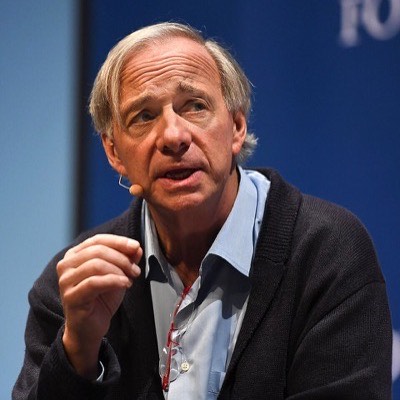 Ray DalioFounder of Bridgewater AssociatesStudies debt cycles as the mechanism behind repeated booms and busts.
- Paul VolckerFormer chair of the US Federal ReservePresided over a deliberate downturn taken as the price of ending inflation.
In their words
“A fundamental characteristic of our economy is that the financial system swings between robustness and fragility.”
“He who lives by the crystal ball will eat shattered glass.”
Where this connects
Approaches that use this idea
You may also like
Pick one and keep going. No pressure.
Keep learning with Money Masters. Get the free weekly newsletter.