
What is the S&P 500?
A plain-English guide to the most watched benchmark in the stock market.
 By Kenny Goodrich, Founder of Money Masters Media
The S&P 500 comes up every time markets are in the news, often without much explanation of what it actually is. This guide breaks down what the index measures, how companies get in, why investors treat it as the benchmark to beat, and the common ways people invest in it. To see where it stands today, you can also check the Dashboard.
What is the S&P 500?
The S&P 500 is a stock market index that tracks the share prices of about 500 of the largest companies listed on U.S. stock exchanges. Rather than following one company, it bundles many together into a single number that rises and falls with the group as a whole.
Because those companies span a wide range of industries and make up a large share of the total U.S. stock market by value, the index is often treated as a snapshot of how big American companies, and by extension the broader market, are doing. When people say the market was up today, they are frequently referring to the S&P 500.
Why the S&P 500 matters
The S&P 500 matters because of what it represents. The companies inside it account for a large portion of the entire U.S. stock market's value, so its movement gives a quick read on the health of large American businesses without having to check hundreds of stocks one by one.
It also shapes the financial world around it. News reports quote it daily, retirement funds track it, and analysts use it as a yardstick to judge how other investments are doing. That wide use is a big part of why a single index has become such a reference point.
How companies get included
A company does not simply request a spot in the S&P 500. The index is maintained by a committee at S&P Dow Jones Indices, which reviews candidates against a set of standards rather than relying on size alone.
In broad terms, a company generally needs to be based in the United States, be large and widely traded enough to matter, and show a record of profitability. The committee has the final say, and it adds or removes companies over time as businesses grow, shrink, merge, or fall out of the criteria. That is why the list of 500 is always shifting, even when the headline number stays the same.
What sectors make up the index
The S&P 500 is sorted into sectors, a way of grouping companies by the kind of business they do. This makes it easier to see where the index's weight sits and which parts of the economy are driving its moves. These are the main sectors, based on a widely used classification system.
Information Technology
Software, hardware, semiconductors, and the companies that build the digital economy.
Health Care
Drugmakers, medical device companies, insurers, and health services providers.
Financials
Banks, insurers, and other companies that move and manage money.
Consumer Discretionary
Goods and services people buy with spare income, like cars, travel, and retail.
Communication Services
Media, telecom, and the platforms people use to connect and share.
Industrials
Machinery, transport, aerospace, and the businesses that build and move things.
Consumer Staples
Everyday essentials like food, drinks, and household products bought in any economy.
Energy
Companies that produce, refine, and distribute oil, gas, and other fuels.
Utilities
Providers of electricity, water, and gas that keep the lights on.
Real Estate
Companies that own, develop, or manage property and real estate assets.
Materials
Producers of raw materials such as chemicals, metals, and building supplies.
How the S&P 500 has performed historically
Over the long sweep of its history, the S&P 500 has trended upward, but the path has been anything but smooth. The index has lived through many cycles, including sharp declines around the dot-com bust in the early 2000s, the financial crisis in 2008, and the brief but steep drop in early 2020, each followed by periods of recovery.
Two ideas tend to matter more than any single year. First, the index can fall a long way and stay down for a while, so short-term swings are normal and at times severe. Second, its history is usually discussed over decades rather than months, because year-to-year results vary widely. Past performance is never a guarantee of future results, and the index can and does have losing years.
Long-run charts can make the climb look steady in hindsight. Living through it is bumpier, which is why time horizon and risk tolerance matter so much.
Why investors use it as a benchmark
A benchmark is a standard you measure against. Because the S&P 500 represents such a large slice of the U.S. market, investors and fund managers often compare their own returns to it. If a portfolio earns less than the index over time, that can be a sign it is not keeping up with the broad market.
This is why you often hear funds described as beating or trailing the S&P 500. The index gives a common, widely understood line to measure against. It is not a verdict on any single choice, just a shared reference that makes very different investments easier to compare.
Common ways people invest in the S&P 500
You cannot buy the S&P 500 itself, because it is a measurement rather than a product. Instead, people invest in funds built to track it as closely as possible. These are the most common routes.
Index mutual funds
Funds that hold the same companies as the index and aim to match its performance rather than beat it. They are usually bought and sold once a day.
Index ETFs
Exchange-traded funds that also track the index but trade throughout the day like a stock. They have become a popular, low-cost way to follow the market.
Retirement accounts
Many workplace plans and retirement accounts offer S&P 500 index options, which is how a lot of people end up invested without picking individual stocks.
Tracking funds aim to mirror the index, but fees and small differences mean returns are never identical. This is general education, not a recommendation of any specific fund.
Benefits and limitations
The S&P 500 is widely followed for good reasons, but no single index tells the whole story. It helps to hold both sides in view.
Benefits
- Instant diversification across hundreds of large companies and many sectors.
- Low cost and simple, with index funds widely available.
- Transparent, since the rules and the list of holdings are public.
- A broad, familiar gauge of the large-company U.S. market.
Limitations
- Covers mostly large U.S. companies, with little small-company or international exposure.
- Weighted by size, so the biggest companies carry the most influence.
- It still falls in downturns and carries the full risk of the stock market.
- Concentration in the largest names and hottest sectors can build up over time.
How this connects to Money Masters tools
The S&P 500 does not move in isolation. It responds to interest rates, inflation, and the wider economy. These free Money Masters tools and guides help you see those connections, all in plain English.
Put the S&P 500 in context
You know what the index is. Now see what is moving it. These free tools track the market, interest rates, and the wider economy, with no jargon and no hype.
Frequently asked questions
What is the S&P 500 in simple terms?
The S&P 500 is a stock market index that tracks the share prices of about 500 of the largest companies listed on U.S. stock exchanges. Instead of following one company, it combines many into a single number that rises and falls with the group, which is why it is often used as shorthand for how the broad market is doing.
Can you buy the S&P 500 directly?
No. The index itself is a measurement, not a product you can purchase. People get exposure to it through index funds and exchange-traded funds built to track it as closely as possible, which many workplace retirement plans also offer.
How does a company get added to the S&P 500?
A committee at S&P Dow Jones Indices selects companies against a set of standards rather than by size alone. In general a company needs to be based in the United States, be large and widely traded enough to matter, and show a record of profitability. The committee adds and removes companies over time, so the list of 500 keeps shifting.
Is the S&P 500 the same as the whole stock market?
Not quite. It covers mostly large U.S. companies and leaves out most small companies and international stocks, so it is a broad gauge rather than the entire market. It is also weighted by size, which means the biggest companies carry the most influence on its moves.
Why do investors use the S&P 500 as a benchmark?
Because it represents such a large slice of the U.S. market, investors and fund managers compare their own returns against it to see whether they are keeping up with the broad market. That is why funds are often described as beating or trailing the S&P 500. It is a shared reference point, not a verdict on any single choice.
Educational content only: This guide is for education and general information, not financial, investment, or tax advice, and not a recommendation to buy or sell any security or fund. The S&P 500 and funds that track it can lose value. Always do your own research and consider speaking with a licensed financial professional before making decisions.
Build your investing system
Turn what you are learning into a repeatable process for researching investments, setting your rules, building your portfolio, and navigating markets.
Explore Money Masters OSExplore this idea further
Who developed it, how they put it, and where it connects across Money Masters.
People behind this idea
 Jack BogleFounder of VanguardBuilt the first index fund tracking this index for ordinary investors.
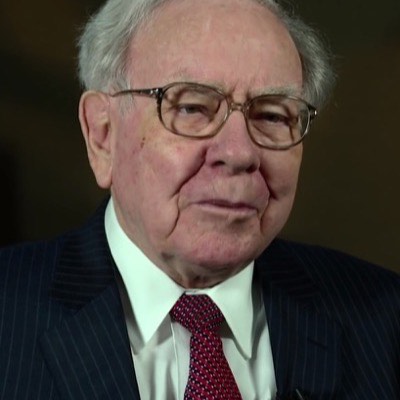 Warren BuffettChairman and CEO of Berkshire HathawayHas pointed most investors towards a low-cost fund tracking exactly this index.
- Burton MalkielEconomist and author of A Random Walk Down Wall StreetUsed the index as the yardstick active managers are measured against.
In their words
“A low-cost index fund is the most sensible equity investment for the great majority of investors.”
“A blindfolded monkey throwing darts at a newspaper's financial pages could select a portfolio that would do just as well as one carefully selected by experts.”
Where this connects
Approaches that use this idea
You may also like
Pick one and keep going. No pressure.
Keep learning with Money Masters. Get the free weekly newsletter.