What is an ETF?
A plain-English guide to exchange-traded funds and how they work.
 By Kenny Goodrich, Founder of Money Masters Media
ETFs have become one of the most popular ways to invest, and the name turns up everywhere once you start paying attention. ETF stands for exchange-traded fund. In plain terms, it is a single investment that holds a basket of many others and trades on an exchange like a stock. ETFs are close cousins of index funds, and the two often hold exactly the same things. This guide explains what ETFs are, how they work, how they compare to mutual funds and individual stocks, why investors use them, and how they fit into a diversified portfolio.
What is an ETF?
An ETF is a fund, which is a pool of money from many investors used to buy a collection of assets such as stocks or bonds. What makes it an exchange-traded fund is that you buy and sell shares of it on a stock exchange, at a live price, throughout the trading day.
That combination is the appeal. You get the diversification of a fund, since one share can represent hundreds or thousands of companies, with the easy trading of a single stock. Many ETFs are also index funds, built to track a market index rather than to beat it.
How ETFs work
When you buy a share of an ETF, you are buying a small slice of everything the fund holds. If the fund tracks a broad index, your one share spreads your money across every company in that index, in roughly the proportions the index uses.
Because ETFs trade on an exchange, the price moves during the day with supply and demand. Behind the scenes, large professional firms can create and redeem ETF shares in bulk, a process that helps keep the market price of an ETF close to the value of the assets it holds. As a beginner, the useful takeaway is simply that an ETF price tends to track its basket closely.
ETFs vs mutual funds
ETFs and mutual funds are both baskets of investments, and these days many are similar in cost and quality. The main differences come down to how and when you trade them.
ETFs
Trade on an exchange throughout the day at a live price, like a stock. They often have low expense ratios, no minimum beyond the price of one share, and tend to be tax efficient.
Mutual funds
Bought and sold once a day at a price set after the market closes. Many are excellent and low cost too, but some carry higher fees or minimum investments. They have been around far longer.
Neither one is automatically better. A low-cost broad ETF and a low-cost broad index mutual fund can hold nearly identical things. What matters most is what is inside and what it costs, not the wrapper.
ETFs vs individual stocks
It also helps to see how an ETF compares to buying a single company. The difference comes down to diversification.
Buying an ETF
One purchase gives you a slice of every holding in the fund, often hundreds of companies. You trade the chance of a single big winner for not depending on any one company.
Buying a single stock
You own one company directly. The upside of being right about it is larger, but so is the damage if it stumbles, and consistently picking winners is genuinely hard.
Common types of ETFs
ETFs come in a wide range of flavors, grouped by what they hold. A few broad categories cover most of what beginners will meet.
Broad market ETFs
Track a wide index such as the S&P 500 or a total market index, holding hundreds or thousands of companies in one fund.
Sector and theme ETFs
Focus on one slice of the market, such as technology or energy. More targeted, and usually less diversified than a broad fund.
Bond ETFs
Hold a basket of bonds instead of stocks. Many investors use them to add steadiness alongside their stock funds.
International ETFs
Hold companies based outside your home country, adding exposure to other economies and currencies.
The index or basket an ETF follows decides what you actually own. To see how the major lists differ, read Stock Market Indexes Explained, or the guides to the S&P 500 and the Nasdaq.
Why investors use ETFs
A few practical strengths explain why ETFs have grown so popular with everyday investors. Most of all, a single ETF can deliver instant diversification that used to take many separate trades to build.
Instant diversification
A single ETF can spread your money across a whole market, so one trade does the work of buying many individual stocks.
Low cost
Many broad ETFs charge very small annual fees, which leaves more of your money invested and working over time.
Flexibility
Because they trade like stocks, ETFs can be bought or sold any time the market is open, and you always know the current price.
Costs and fees
ETFs are often praised for low costs, and many are genuinely cheap, but it is worth knowing what you actually pay. The main cost is the expense ratio, a small annual fee charged as a percentage of the money you have invested. Broad index ETFs often have very low expense ratios, while niche or actively managed ones charge more.
There are two smaller costs to know. The first is the spread, the tiny gap between the buying and selling price, which is wider on thinly traded funds. The second is any commission your broker charges to trade, though many now charge nothing for ETF trades. For a fuller look at how fees quietly eat into returns, see Index Fund Investing.
ETFs within diversified portfolios
For many investors, ETFs are the building blocks of an entire portfolio. Because a handful of broad ETFs can cover stocks, bonds, and different regions, you can assemble a well-spread mix without buying hundreds of individual securities.
How you combine them is the job of asset allocation, which decides how much goes into each type of asset. Adding to your ETFs on a regular schedule through dollar cost averaging turns that plan into a steady habit rather than a series of timing decisions.
Risks of ETF investing
An ETF is a convenient wrapper, but it does not change the basic truth that investing carries risk. The relationship between risk and reward applies to ETFs just as it does to anything else.
Market risk remains
An ETF rises and falls with whatever it holds. A broad stock ETF still drops when the market drops. The wrapper does not remove the underlying risk.
Narrow funds concentrate risk
Niche sector or theme ETFs can be far less diversified than they look, leaving you exposed to a single trend or industry.
Some ETFs are complex
A few products, such as leveraged or inverse ETFs, are built for short-term trading and can behave in surprising ways. They are not meant for long-term beginners.
Because a broad ETF moves with the whole market, the wider backdrop matters. Tools like the Economic Outlook Tracker are for understanding that context, not for timing trades.
What beginners should understand
ETFs are a useful and flexible tool, but a few honest points make them easier to use well.
The label is not the whole story
Two ETFs can behave very differently depending on what they hold. Knowing the index or basket inside matters more than the letters ETF on the label.
Watch the costs
Most of an ETF cost is the expense ratio, but the gap between buying and selling prices can matter too, especially for thinly traded funds.
They reward patience
Just because you can trade an ETF all day does not mean you should. For most people, a steady, long-term approach works best.
How this connects to Money Masters tools
ETFs hold pieces of the market, so it helps to understand the indexes and the economy behind them. These free Money Masters tools and guides break it down in plain English. Start with the Dashboard to see markets and the economy on one screen.
Put the building blocks together
ETFs make it simple to own a diversified slice of the market, but they work best inside a clear plan. These free tools and guides track the market, rates, and the economy together, with no jargon and no hype.
Frequently asked questions
What is an ETF?
An ETF (exchange-traded fund) is a single investment that holds a basket of many underlying assets — like stocks or bonds — and trades on an exchange throughout the day like a stock. Buying one share gives you a slice of everything the fund holds.
How is an ETF different from a mutual fund?
Both pool money to buy a basket of assets, but an ETF trades on an exchange throughout the day at a live price, while a mutual fund is priced once daily after the close. ETFs are often lower-cost and more tax-efficient, though the right choice depends on your broker and how you invest.
How is an ETF different from a stock?
A stock is a share in one company; an ETF is a basket of many holdings in one share, so it spreads your money across dozens or thousands of securities at once. That built-in diversification is a key reason beginners use ETFs.
What does an ETF cost?
The main cost is the expense ratio — a small annual fee charged as a percentage of your investment. Broad-market ETFs are often very cheap, but you should also watch the gap between the buying and selling price, especially for thinly traded funds.
Are ETFs a good choice for beginners?
Many beginners use broad ETFs for instant diversification at low cost, but the label 'ETF' alone does not tell you what is inside — two ETFs can behave very differently depending on their holdings. ETFs still carry market risk and reward a patient, long-term approach.
Educational content only: This guide is for education and general information, not financial, investment, or tax advice, and not a recommendation to buy or sell any security, fund, or ETF, or to follow any particular investing strategy. Investing carries risk, including the possible loss of money you put in. Always do your own research and consider speaking with a licensed financial professional before making decisions.
Build your investing system
Turn what you are learning into a repeatable process for researching investments, setting your rules, building your portfolio, and navigating markets.
Explore Money Masters OSExplore this idea further
Who developed it, how they put it, and where it connects across Money Masters.
People behind this idea
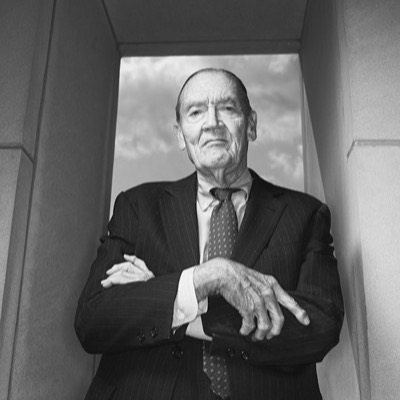 Jack BogleFounder of VanguardBacked the index behind most ETFs while questioning how easily they can be traded.
- Burton MalkielEconomist and author of A Random Walk Down Wall StreetArgued that a broad, cheap fund is enough for most investors, whatever wrapper it comes in.
- David SwensenLongtime chief investment officer of the Yale endowmentRecommended plain, low-cost, diversified funds to individual investors.
In their words
“Investing is not nearly as difficult as it looks. Successful investing involves doing a few things right and avoiding serious mistakes.”
“Investors should pursue a simple strategy of holding low-cost index funds.”
Where this connects
Approaches that use this idea
You may also like
Pick one and keep going. No pressure.
Keep learning with Money Masters. Get the free weekly newsletter.