
What is compound interest?
A plain-English guide to how money can grow on its own growth over time.
 By Kenny Goodrich, Founder of Money Masters Media
Compound interest is often described as one of the most powerful ideas in finance, and once it clicks, it is easy to see why. In simple terms, it means earning returns not just on the money you put in, but also on the returns that money has already earned. Given enough time, that loop can turn steady, ordinary saving into something remarkable. This guide explains what compound interest is, how it differs from simple interest, why time is the real engine, and how compounding shows up in everyday saving and investing. A steady habit like dollar cost averaging is one way people put it to work.
What is compound interest?
Compound interest is interest earned on interest. When you earn a return, that return gets added to your balance. The next time interest is calculated, it is based on the new, larger balance, so you earn a little more. Repeat that again and again, and each step builds on the one before it.
It can sound almost too simple to matter, and over a year or two it barely does. The real effect only shows up when you let it run for a long time. That is why compounding is so closely tied to patience and to starting early.
Simple interest vs compound interest
The clearest way to understand compounding is to compare it with its plainer cousin, simple interest. The difference is what happens to the interest you earn.
Simple interest
Pays out only on your original amount, year after year. Put in a fixed sum and a simple rate always pays the same, because the interest is never added back to earn more.
Compound interest
Pays on your original amount plus all the interest you have already earned. Each payment is added back, so the base you earn on keeps growing, and the growth speeds up over time.
Why time matters
If there is one lesson in compounding, it is that time does most of the work. Because each year builds on the one before, the growth is slow at first and then picks up speed. The later years of a long timeline tend to add far more than the early ones did.
This is why starting early can matter more than the exact amount you begin with. A modest sum given decades to compound can end up ahead of a larger sum that starts much later. The most valuable ingredient is time, and it is the one thing you cannot buy back.
The snowball effect
People often picture compounding as a snowball rolling downhill, gathering more snow as it grows. A simple, made-up example shows the shape of it. Imagine $1,000 growing at an invented 10 percent a year.
| Time | Simple interest | Compound interest |
|---|---|---|
| After 1 year | $1,100 | $1,100 |
| After 10 years | $2,000 | about $2,600 |
| After 20 years | $3,000 | about $6,700 |
| After 30 years | $4,000 | about $17,400 |
This is a made-up example using an invented 10 percent yearly rate, chosen only to show the shape of compounding. It is not a prediction or an expected return, and real investments rise and fall. The point is the pattern: the two columns barely differ early on, then split apart as growth feeds on itself.
Compounding and investing
In investing, compounding works a little differently than in a savings account, but the idea is the same. Instead of a fixed interest rate, your returns come from things like rising prices and reinvested dividends, the regular payments some investments make. Putting those payments back to work, rather than spending them, is what keeps the snowball rolling.
This is one reason long-term investors favor broad, low-cost funds. Holding the market through index funds, ETFs, or mutual funds, inside a sensible asset allocation, and adding to them steadily through dollar cost averaging, gives compounding the decades it needs to do its work.
Compounding and saving
Compounding is not only for investors. A savings account pays interest, and many add it to your balance regularly, so your savings compound too. You will often see this expressed as an annual percentage yield, or APY, which already accounts for compounding over the year.
The catch is that savings rates are usually modest, and rising prices can reduce what that interest is worth. Cash savings are valuable for safety and for money you may need soon, but over very long periods, the faster growth potential of investing is what most people rely on to try to stay ahead of inflation.
Common mistakes people make
Compounding is powerful, but a few common habits quietly work against it.
Waiting to start
Because time does the heavy lifting, the most common mistake is simply starting late. Even small amounts have more impact when they have longer to compound.
Interrupting the process
Cashing out early or constantly moving money around resets the snowball. Compounding rewards leaving things alone far more than it rewards tinkering.
Letting fees and debt compound
Compounding cuts both ways. High fees quietly compound against your returns, and unpaid high-interest debt can compound against you faster than investments compound for you.
Limits of compounding
Compounding is genuinely powerful, but it is not magic, and a few honest limits are worth keeping in mind. The biggest is that investment returns are not fixed the way a savings rate is. Markets rise and fall, some years are negative, and the smooth curves in any example are far smoother than real life. The connection between risk and reward still applies.
Compounding also works only if you leave it alone and stay invested, which is harder during downturns than any chart suggests. And rising prices quietly offset some of the growth, which is one reason it helps to keep an eye on the wider backdrop with tools like the Economic Outlook Tracker.
What beginners should understand
A few grounded ideas make compounding much easier to put to work.
Time beats timing
The biggest lever is how long your money compounds, not picking the perfect moment. Starting steadily and staying invested matters more than getting in at the right time.
Investment growth is not fixed
A savings account compounds at a set rate, but investment returns vary and can be negative in any year. Compounding still works over time, just not in a straight line.
Reinvesting keeps it going
Compounding in investing depends on putting earnings back to work. Reinvesting dividends and gains, rather than spending them, is what keeps the snowball rolling.
How this connects to Money Masters tools
Compounding plays out across saving, investing, and the wider economy, and it helps to see them together. These free Money Masters tools and guides break it down in plain English. Start with the Dashboard to see markets and the economy on one screen.
Give compounding time to work
The most powerful thing about compounding is also the simplest. Start early, stay steady, and let time do the heavy lifting. These free tools and guides track the market, rates, and the economy together, with no jargon and no hype.
Frequently asked questions
What is compound interest in simple terms?
Compound interest is interest earned on both your original money and the interest it has already earned. Each time interest is added, the next calculation is based on a larger balance, so the amount you earn slowly grows over time.
What is the difference between simple and compound interest?
Simple interest pays only on your original amount, so it adds the same figure each period. Compound interest adds each payment back to the balance, so the base you earn on keeps getting bigger and the growth speeds up over long periods.
Why does time matter so much for compounding?
Because each period builds on the one before it, growth starts slow and picks up speed, and the later years tend to add far more than the early ones. That is why starting early can matter more than the exact amount you begin with.
Does compound interest work the same way in investing?
The idea is the same, but the rate is not fixed. Instead of a set interest rate, investment growth comes from things like changing prices and reinvested dividends, which vary year to year and can be negative in any given year. Reinvesting earnings rather than spending them is what keeps compounding going.
Can compounding work against you?
Yes. High fees quietly compound against your returns over time, and unpaid high-interest debt can compound against you faster than investments compound for you. The same force that helps a balance grow can also make a cost grow.
Educational content only: This guide is for education and general information, not financial, investment, or tax advice, and not a recommendation to buy or sell any security or fund, or to follow any particular saving or investing strategy. The examples are simplified illustrations, not predictions. Investing carries risk, including the possible loss of money you put in. Always do your own research and consider speaking with a licensed financial professional before making decisions.
Build your investing system
Turn what you are learning into a repeatable process for researching investments, setting your rules, building your portfolio, and navigating markets.
Explore Money Masters OSExplore this idea further
Who developed it, how they put it, and where it connects across Money Masters.
People behind this idea
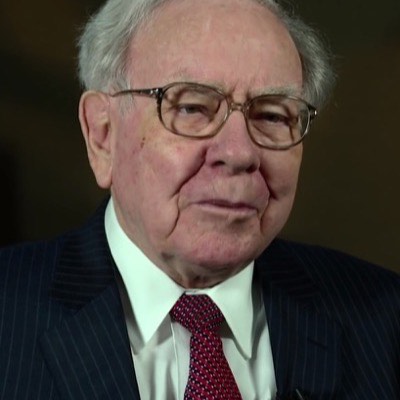 Warren BuffettChairman and CEO of Berkshire HathawayHis record is often used to illustrate compounding, because most of it accrued over a very long holding period.
 Charlie MungerLongtime vice chairman of Berkshire HathawayFramed the practical lesson as leaving compounding undisturbed rather than trying to improve on it.
- Morgan HouselAuthor of The Psychology of MoneyPoints out that durable, unspectacular returns compound further than brilliant ones that break.
In their words
“The big money is not in the buying and selling, but in the waiting.”
“Good investing is not necessarily about earning the highest returns. It is about earning pretty good returns that you can stick with for the longest period of time.”
Where this connects
Approaches that use this idea
You may also like
Pick one and keep going. No pressure.
Keep learning with Money Masters. Get the free weekly newsletter.