
Buy and Hold
Owning an investment through complete market cycles and letting time, rather than trading, decide the outcome.
What the strategy is
Buy and hold is the practice of purchasing an investment and keeping it through rises and falls, with selling reserved for a short list of specific reasons rather than treated as an ongoing activity. The strategy is defined by what it removes: the recurring decision about whether today is a good day to be invested.
How it works
The investor buys an asset, usually a broad fund or a business they intend to own for years, and then does nothing on a routine basis. Dividends are either reinvested or spent, and new money is added to the same holdings rather than used to rotate between them. Turnover approaches zero, which is the point rather than a side effect.
Selling is governed by written triggers instead of by market conditions. The usual three are that the reason for owning the asset no longer holds, that the position has grown far enough out of proportion to require trimming, or that the money is needed for the purpose it was saved for. A price decline is not on that list, because a decline is information about other buyers rather than about the holding.
Because gains are not realised until a sale, unrealised profit keeps compounding on money that would otherwise have gone to tax. That deferral is a real part of the arithmetic in a taxable account, and it disappears the moment the position is traded, which is why the strategy tends to be run more strictly outside tax-sheltered accounts than inside them.
Advantages
- Costs fall close to their floor. Almost no trades means almost no commissions, spreads or realised tax, and cost is the one input an investor controls with certainty.
- It removes the decision that most often goes wrong. Selling during a decline is the single most expensive habit in retail investing, and a strategy with no routine sell decision cannot make it by accident.
- It keeps the investor present for the small number of days that carry most of the return, which cannot be identified in advance and cluster near the worst periods.
- It takes very little time to run, so it stays workable for someone who has no interest in following markets and no hours to give them.
Disadvantages
Stated at the same length as the advantages, because a strategy page that only lists upsides is marketing.
- It requires sitting through declines of a size most people have not experienced before they meet one, with no action available that would feel like a response.
- It offers no protection against a holding that is permanently impaired rather than temporarily cheap, and the strategy contains nothing that tells the two apart.
- A portfolio left alone drifts. Winners grow into an outsized share of the total, so the risk being carried at year ten is rarely the risk that was chosen at year one.
- It can leave money in a market that goes nowhere for a very long time, and the investor has no way to know in advance that they are in one of those periods.
- It fits badly with money that has a near-term job. Holding through a cycle assumes you can wait for the cycle, and a house deposit due in two years cannot.
Who typically uses it
- Long-horizon savers investing through workplace retirement plans, where the money cannot easily be touched and the holding period is measured in decades.
- Index fund investors, for whom the strategy is close to automatic: a fund tracking a broad market has no thesis that can break, only a market that can fall.
- Business owners in the Berkshire tradition, who treat a share as a fraction of an enterprise and see no reason to sell a good one because its quoted price moved.
- It fits poorly for anyone whose money has a date attached, and for anyone who has already discovered that they sell during declines. The strategy assumes a temperament, and assuming the wrong one is expensive.
Historical examples
Specific, checkable episodes rather than illustrations, including the ones where the strategy cost money.
Berkshire Hathaway and Coca-Cola, held since 1988
Berkshire began buying Coca-Cola in 1988 and completed the position by 1994, and it has appeared in every annual report since. The dividend the position pays each year now exceeds a large share of what the stake originally cost, which is the specific arithmetic buy and hold is built on. It is also a survivor of a selection process: Berkshire has exited plenty of positions, so this holding illustrates the outcome the strategy hopes for rather than the outcome it guarantees.
The 2007 to 2009 decline and the recovery that followed
The S&P 500 fell roughly 57 percent from its October 2007 high to its March 2009 low, and did not close above the 2007 level again until March 2013. An investor who held throughout got their money back and then some; an investor who sold near the bottom converted a paper loss into a realised one and then faced the separate problem of deciding when to return. The example is usually told as a success story, and the part worth noticing is the five and a half years of waiting.
Japan after 1989, the counterexample
The Nikkei 225 closed at 38,915 on 29 December 1989 and did not close above that level again until February 2024, a wait of more than thirty four years. Holding worked eventually, in the sense that the index recovered, but a Japanese investor who bought at the peak and held spent most of a working life underwater. Any account of buy and hold that leaves this out is describing one market rather than the strategy.
Risks
- Single-company risk, which the strategy does nothing to reduce. General Electric fell by roughly 90 percent from its 2000 peak to its 2018 low and left the Dow Jones Industrial Average that year, and holding was the wrong answer throughout.
- Sequence risk for anyone who may have to sell at a fixed time. The strategy protects a holding period, not a deadline, and a decline in the year the money is needed is not recoverable by waiting.
- Behavioural risk, which is the one that actually ends most attempts. The strategy is trivially simple to describe and hard to execute, and it usually fails at the bottom rather than at the top.
- Survivorship in the evidence. The long-run records used to support the strategy are drawn largely from markets that survived, and the markets that did not are absent from the average by construction.
Common mistakes
- Treating it as buy and forget. Never selling on price is not the same as never looking, and a holding whose original reason has quietly disappeared still needs to be noticed.
- Using it to avoid admitting an error. Holding a broken position and calling it patience is a different decision than holding a sound one, and only one of the two is the strategy.
- Applying it to money that is needed soon, where the ability to wait out a cycle does not exist.
- Treating a single company the way an index is treated. An index replaces its failures automatically; a portfolio of ten stocks does not, and the investor has to do that job themselves.
- Abandoning it in the middle. The costs are paid during declines and the benefits arrive afterwards, so stopping partway through collects the costs without the benefits.
Common misconceptions
- The claim
Buy and hold means never selling.
What is actually the caseIt means no scheduled or price-driven selling. Practitioners sell when the reason for owning the asset has gone, when a position has grown out of proportion, or when the money is needed. Warren Buffett has exited large positions repeatedly, including the airline holdings sold in 2020.
- The claim
It always beats trading.
What is actually the caseIt has beaten frequent trading across long periods in markets that rose, largely because it costs less. It has no such record in a market that fell for decades, and Japan after 1989 is the standing counterexample.
- The claim
It is a strategy for people who do not know what they are doing.
What is actually the caseIt is what several of the most active professional analysts in the field concluded after doing the work. The reasoning behind holding is often more demanding than the reasoning behind trading, because nothing about it feels like effort.
Investors associated with this strategy
Listed because of a documented connection to the approach, not because they are well known.
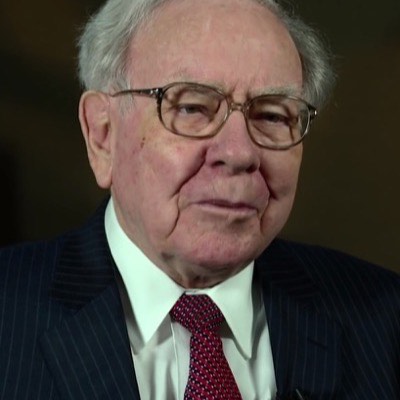 Warren BuffettChairman and CEO of Berkshire Hathaway
 Charlie MungerLongtime vice chairman of Berkshire Hathaway
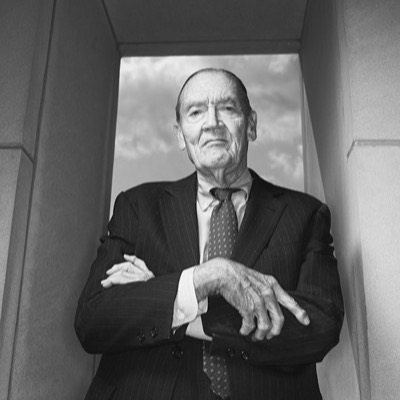 Jack BogleFounder of VanguardPeter LynchFormer manager of the Fidelity Magellan FundPhilip FisherGrowth investor and author of Common Stocks and Uncommon ProfitsJeremy SiegelProfessor and author of Stocks for the Long RunJohn TempletonFounder of the Templeton Growth FundWalter SchlossValue investor who worked under Benjamin Graham
In their words
“Our favorite holding period is forever.”
“The big money is not in the buying and selling, but in the waiting.”
“The key to making money in stocks is not to get scared out of them.”
“The longer the holding period, the better stocks look relative to bonds.”
Related guides
Related concepts
Related calculators
Related market pages
Related investing philosophies
Related investor comparisons
Related strategies
Frequently asked questions
Does buy and hold mean you never sell anything?
No. It means selling is not part of the routine and is not triggered by price. The recognised reasons to sell are that the reason for owning the asset no longer applies, that the position has grown far out of proportion to the rest of the portfolio, or that the money is needed for what it was saved for. A falling price on its own is not one of them.
How long does an investor have to hold for this to be buy and hold?
Long enough to sit through at least one full cycle, which historically has meant years rather than months. There is no fixed number, but the strategy only pays for itself over a period long enough to include a serious decline and the recovery from it, because the costs it avoids are the costs of reacting to that decline.
What happens to buy and hold in a crash?
Nothing happens to the strategy, which is the difficulty. The portfolio falls with the market and the investor takes no action, so the entire cost is paid up front in discomfort. Whether it works out then depends on the holding recovering, which broad indices historically have and individual companies sometimes have not.
Does buy and hold work for individual stocks as well as funds?
It behaves very differently. An index quietly removes failing companies and adds their replacements, so the thing being held renews itself. A single company has no such mechanism, and a portfolio of individual stocks held indefinitely will eventually contain businesses that are permanently impaired unless the investor removes them.
Is buy and hold the same as passive investing?
They overlap but are not the same. Passive investing describes what you own, a fund tracking a market rather than a selection someone made. Buy and hold describes how long you keep it. An investor can hold a concentrated set of individual stocks for decades, which is buy and hold without being passive.
What is the strongest argument against buy and hold?
That the evidence for it is drawn mostly from markets that recovered. Japan after 1989 took more than three decades to regain its high, and individual companies frequently never do. The strategy is a bet that the thing being held survives and grows, and that bet is safer for a diversified index than for anything narrower.
Sources
Where the dates, figures and claims on this page come from. Book and paper citations carry no link because the durable reference is the title rather than any one copy of it.
- Berkshire Hathaway shareholder letters and annual reports
- S&P 500 index history, Federal Reserve Economic Data
- Nikkei 225 index history, Federal Reserve Economic Data
- Jeremy Siegel, Stocks for the Long Run, first published 1994
- John C. Bogle, Common Sense on Mutual Funds, 1999
Get smarter about investing
Clear market insights, useful tools, and beginner-friendly investing education.
Educational content only. This page explains how an investing strategy works and where it fails. It is not a recommendation to use it, not investment advice, and not a claim that any strategy suits your circumstances.