
Quality Investing
Owning businesses with durable competitive advantages and paying a fair rather than a bargain price for them.
Overview
Quality investing holds that the most reliable source of long-run return is a business that can keep earning well for decades, and that such a business is worth a fair price rather than a discount. It grew out of value investing and disagrees with it on one specific point: what you should be willing to pay.
How the philosophy developed
The qualitative half of the tradition came from Philip Fisher, who argued in the 1950s that a company's management, research culture and competitive position deserve as much scrutiny as its balance sheet, and who researched businesses by talking to their customers, suppliers and competitors.
The decisive moment came inside Berkshire Hathaway. Charlie Munger argued that Warren Buffett should stop buying statistically cheap but weak companies and start paying fair prices for excellent ones. See's Candies in 1972, bought well above book value, tested the argument and worked, and Buffett has since described it as the purchase that converted him.
The idea was later formalised through the language of competitive advantage, particularly by Bruce Greenwald and by writers on economic moats, which gave practitioners a vocabulary for what makes an advantage durable rather than temporary.
Core principles
- A business that can raise prices without losing customers compounds in a way a merely cheap one does not.
- Time works for the owner of an excellent business and against the owner of a poor one, so holding period and business quality are connected.
- What protects returns is a structural barrier, such as a brand, a network, a cost advantage or high switching costs, rather than a temporary lead.
- Paying a fair price for a durable business usually beats paying a low price for a deteriorating one.
How decisions get made
The work starts with the competitive position rather than the multiple. Practitioners try to establish why a company earns good returns, whether anything stops a competitor copying it, and how long that barrier is likely to hold.
Much of the evidence is qualitative and comes from outside the accounts: what customers say, how suppliers describe the relationship, whether prices have been raised without losing volume. Philip Fisher called this scuttlebutt, and its modern equivalents are customer reviews, employee sites and industry disclosures.
Price still matters but is a second question rather than the first. The test is whether the price is defensible given the durability of the earnings, not whether it is low relative to the market.
How it approaches valuation
Valuation is normally a discounted cash flow, but the forecast extends much further than in classical value investing because the whole thesis is that the earnings persist. That makes the terminal value an unusually large share of the answer, which is the main technical criticism of the approach.
Practitioners also lean on measures of how efficiently a business turns capital into profit, particularly return on equity and return on invested capital, on the reasoning that a durable advantage should be visible as consistently high returns that competition has failed to erode.
How it approaches risk
The risk that matters is the erosion of the competitive advantage, which usually happens slowly and is invisible in a single year's numbers. Practitioners watch for pricing power weakening, market share bought rather than earned, and returns on capital drifting toward the industry average.
The second risk is overpaying for durability that turns out to be shorter than assumed. Because the valuation depends on cash flows far in the future, an error about how long the advantage lasts is expensive in a way that an error about next year is not.
How portfolios are built
Portfolios are concentrated, typically far more than a classical value portfolio, because the research required to judge a competitive position properly limits how many companies anyone can cover.
Turnover is low by design. If the thesis is that the business compounds for decades, selling on a price move contradicts the reason for owning it, and practitioners in this tradition tend to sell only when the competitive position deteriorates.
Time horizon
Long, often measured in decades. The approach depends on earnings persisting and compounding, and that argument cannot be tested over a few quarters. Holding periods of ten years or more are normal rather than exceptional.
Where the approach can work well
- It aligns the holding period with the source of return, so patience is doing real work rather than being a virtue asserted.
- Low turnover reduces costs and taxes, which compounds in the investor's favour over long periods.
- A durable business is more forgiving of a valuation error than a fragile one, because time repairs a modest overpayment.
- The research is intelligible: an investor can usually explain in plain language why the company keeps its customers.
Limitations and criticisms
A balanced view includes where the approach struggles, presented neutrally.
- Quality is widely recognised, so the businesses that pass the test are rarely cheap and the approach can involve paying prices that leave little room for error.
- The valuation depends heavily on cash flows beyond any forecastable horizon, which invites more confidence than the inputs support.
- Judging durability is a qualitative call, and the history of investing is full of advantages that looked structural until a technology change removed them.
- Concentration means a single mistaken judgment about a competitive position has a large effect on the outcome.
- The approach can drift into paying any price for a fashionable business, at which point it stops being distinguishable from momentum.
Common misconceptions
- The claim
Quality investing means buying famous companies.
What is actually the caseRecognition is not an advantage. The test is whether a structural barrier stops competitors taking the profits, and plenty of well known companies have no such barrier.
- The claim
Price does not matter if the business is good enough.
What is actually the caseIt matters less, not not at all. Paying far above any defensible estimate has produced poor outcomes even in businesses that went on to perform exactly as expected.
Investors associated with this approach
Listed because of a documented intellectual connection to the approach, not because they are well known.
 Charlie MungerLongtime vice chairman of Berkshire Hathaway
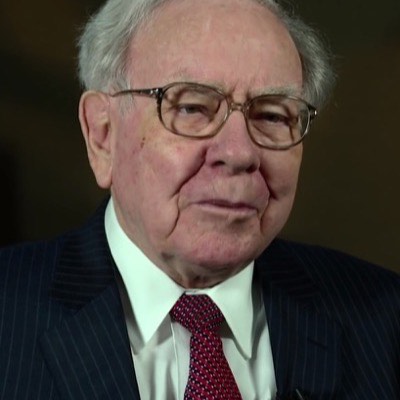 Warren BuffettChairman and CEO of Berkshire HathawayPhilip FisherGrowth investor and author of Common Stocks and Uncommon ProfitsJoel GreenblattFounder of Gotham Capital and authorMohnish PabraiInvestor and author of The Dhandho InvestorKen FisherFounder and executive chairman of Fisher InvestmentsBruce GreenwaldProfessor and author on value investing and competition
In their words
“It is far better to buy a wonderful company at a fair price than a fair company at a wonderful price.”
“I do not want a lot of good investments; I want a few outstanding ones.”
Context: Fisher ran a deliberately concentrated portfolio backed by years of research on every holding. Standing alone the line argues against diversification, which is the opposite of what most investors need.
“The big money is not in the buying and selling, but in the waiting.”
“The stock market is filled with individuals who know the price of everything, but the value of nothing.”
Strategies that put this into practice
A philosophy is what an investor believes. These are the procedures people run on the strength of it.
Related guides
Related concepts
Useful tools
Markets and hubs
Investor comparisons
Related philosophies
Frequently asked questions
What is an economic moat?
A structural feature that stops competitors taking a company's profits, such as a trusted brand, a network that becomes more useful as it grows, a genuine cost advantage, or switching costs that make leaving expensive. The word describes durability rather than current profitability.
How is quality investing different from value investing?
They share the framework and disagree about price. Classical value investing wants a discount to a present estimate of worth. Quality investing argues that a business able to raise prices for decades is worth a fair price, because the value grows while you hold it rather than staying fixed.
How do you tell whether an advantage is durable?
The usual evidence is a long record of returns on capital that competition has failed to erode, plus the ability to raise prices without losing volume. Neither is conclusive, and the history of investing contains many advantages that looked structural until a technology change removed them.
How do quality investors research a competitive position?
Philip Fisher's practice of researching a company by talking to the people around it: customers, suppliers, former employees and competitors. His argument was that a competitive position is visible to the people who deal with a business long before it shows in the reported numbers.
Can you overpay for a great business?
Yes, and it is the characteristic failure of this approach. Because the valuation rests on cash flows far in the future, a price can embed assumptions about durability that the business never had, and the error only becomes visible years later.
Get smarter about investing
Clear market insights, useful tools, and beginner-friendly investing education.
Educational content only. This page explains how an investing approach works and where it falls short. It is not a recommendation to adopt it, not investment advice, and not a claim that any approach suits your circumstances.