
Warren Buffett vs Cathie Wood
Overview
This is the most active disagreement on the site and the two positions are close to mirror images. Buffett looks for businesses insulated from disruption and pays a fair price for that insulation. Wood looks for the companies doing the disrupting and accepts that most of the value is years away and highly uncertain.
Both are making a claim about where returns come from over a decade or more. Buffett's is that durability compounds quietly; Wood's is that a small number of technologies reorganise entire industries and that conventional valuation systematically underprices them.
Quick comparison
| Dimension | 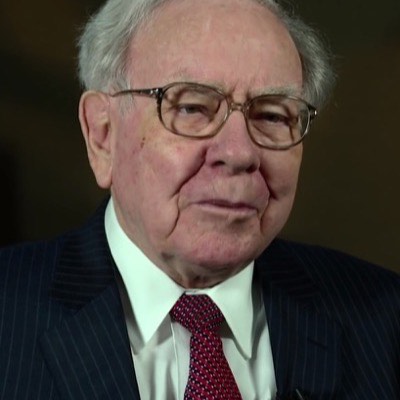 Warren Buffett Warren Buffett | 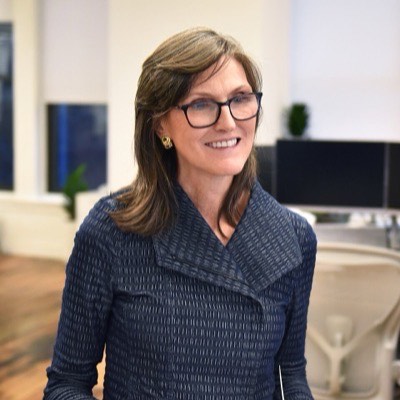 Cathie Wood Cathie Wood |
|---|---|---|
| Investment philosophy | Own businesses whose competitive position resists change. | Own businesses causing change, before the market prices the outcome. |
| Risk philosophy | Risk is permanent loss, avoided by staying inside a circle of competence. | Risk is missing a technology transition, accepted alongside high volatility. |
| Valuation approach | Discounted cash from predictable operations, with a margin of safety. | Forecast adoption curves and cost declines, projected years forward. |
| Portfolio construction | Concentrated in a small number of very large, established positions. | Concentrated in a modest number of high-conviction innovation holdings. |
| Diversification | Unnecessary for someone who understands what they own. | Across themes rather than for its own sake. |
| Market timing | Not attempted. Hold cash until a price appears. | Not attempted, though conviction is added to during declines. |
| Economic beliefs | Deliberately absent from decisions. | Explicitly deflationary, arguing technology suppresses prices. |
Scroll the table sideways on a narrow screen. Each dimension is explained in full below.
Investment philosophy
Own businesses whose competitive position resists change.
Own businesses causing change, before the market prices the outcome.
The two definitions of a good business are almost opposed. A moat is protection from disruption; a disruptive company is the thing being protected against. Both can produce returns and they do so on very different timescales and with very different failure modes.
Risk philosophy
Risk is permanent loss, avoided by staying inside a circle of competence.
Risk is missing a technology transition, accepted alongside high volatility.
This is the clearest divide. Buffett treats the possibility of being wrong as the thing to be minimised; Wood treats the possibility of being absent as the larger danger and accepts drawdowns that would end most mandates.
Valuation approach
Discounted cash from predictable operations, with a margin of safety.
Forecast adoption curves and cost declines, projected years forward.
Wood's approach leans on Wright's law, the observation that unit costs fall predictably as cumulative production doubles. Buffett would regard a valuation resting on a decade of projected adoption as outside what can be estimated.
Portfolio construction
Concentrated in a small number of very large, established positions.
Concentrated in a modest number of high-conviction innovation holdings.
Both concentrate, which is a genuine similarity worth noting. The difference is what they concentrate into: Buffett into businesses with long histories, Wood into companies whose economics are not yet settled.
Diversification
Unnecessary for someone who understands what they own.
Across themes rather than for its own sake.
Wood's funds spread across several innovation platforms, but the holdings are correlated because they respond to similar conditions, which is a criticism regularly made of the structure.
Market timing
Not attempted. Hold cash until a price appears.
Not attempted, though conviction is added to during declines.
Neither claims to time markets. Wood has been consistent about adding to positions when they fall, which is a stated policy rather than a forecast and has produced both recoveries and deeper losses.
Economic beliefs
Deliberately absent from decisions.
Explicitly deflationary, arguing technology suppresses prices.
Wood argues that technological progress is fundamentally deflationary and that this is underappreciated in how markets price both innovation and inflation. Buffett makes no macroeconomic argument at all.
Famous books
- The Essays of Warren BuffettWarren Buffett
Not written as a book. Lawrence Cunningham arranged passages from the Berkshire shareholder letters by subject, with Buffett's cooperation, so the material is his and the structure is not. It is the closest thing to a systematic statement of his thinking, covering governance, accounting, valuation and mergers in his own words. Readers who find the annual letters scattered usually find this version far easier to follow.
- The Snowball2008Warren Buffett
Alice Schroeder's authorised biography, written with years of access to Buffett and the people around him. Its value is that it is not a tribute: it covers the personal cost of his single-mindedness alongside the investment record. It remains the fullest account of how he actually spent his time and made decisions.
- Buffett: The Making of an American Capitalist1995Warren Buffett
Roger Lowenstein's earlier biography, written without Buffett's cooperation and stronger on the business history as a result. It traces the partnership years and the transformation of Berkshire in more detail than later accounts. A useful corrective for anyone who has only read the authorised version.
Famous quotes
Warren Buffett“Price is what you pay. Value is what you get.”
“We simply attempt to be fearful when others are greedy and to be greedy only when others are fearful.”
Cathie WoodNo sourced quotations in the library yet.
Biggest successes
- Ran Buffett Partnership Ltd from 1956 and closed it in 1969 by choice, returning capital because he could no longer find opportunities he understood. Voluntarily shutting a successful fund rather than lowering the standard is rare in the industry, and it established the discipline his later record depended on.
- Bought National Indemnity in 1967, which mattered far more than its size suggested. Insurance premiums are collected before claims are paid, and that pool of money gave Berkshire investable capital no lender could withdraw, turning a stock-picking vehicle into a permanent-capital compounding machine.
- Acquired See's Candies in 1972 at a price well above its book value. It broke the Graham rule he had trained on and worked anyway, which is why he credits it with converting him from buying cheap companies to paying fair prices for durable ones.
- Founded ARK Invest in 2014 and built it around actively managed exchange-traded funds, combining two things the industry had largely kept apart.
- Published ARK's research openly, including the models and assumptions behind it, which allowed outside analysts to check and contest the work directly.
- Brought themes such as genomics, energy storage and autonomous systems to a retail audience that had previously had little access to them.
Biggest criticisms
A balanced view includes the main criticisms of each approach, presented neutrally.
- Technology is the longest-running charge. Critics argued that avoiding an entire sector for decades was not discipline but a refusal to learn, and that the circle of competence had become a justification for standing still. Supporters replied that he sat out the late-1990s boom and therefore also the bust that followed, and that declining to value what you cannot value is the method working. What actually happened complicates both readings: Berkshire eventually made Apple its largest holding, which critics treat as an admission and supporters treat as the circle widening on evidence rather than on enthusiasm.
- Scale is the criticism he makes himself. Critics point out that a company of Berkshire's size cannot buy anything small enough to matter, so the opportunity set has narrowed to a handful of very large deals. Supporters answer that permanent capital and a reputation that brings deals to the door are advantages nobody else has. The record suggests the critics have the better of it: Berkshire's results have moved steadily closer to the broad market as it has grown, and Buffett has told shareholders directly not to expect the early rates again.
- Whether the method transfers is genuinely contested. Critics argue the record rests on insurance float, permanent capital and preferential terms in private deals, none of which an individual can obtain, so studying him teaches habits that cannot be executed. Supporters distinguish the structure from the principles and note that the reasoning about business quality and price survives without the balance sheet. History gives a mixed verdict: investors who took the principles have generally done better than those who tried to replicate the machinery.
- Disruptive-growth investing can involve major volatility and long stretches of underperformance.
- Concentrated bets on early-stage technology can swing sharply with changing interest rates and sentiment.
- Some of ARK's long-range price forecasts have been criticized as overly optimistic.
Lessons investors can learn
Plain-English takeaways. Context for learning, not advice to buy or sell anything.
- 1A durable business and a disruptive one are opposite bets on the same question about how much the world changes.
- 2Concentration is common to both, and the failure mode differs entirely depending on what you concentrate into.
- 3A valuation that depends on a decade of forecast adoption cannot be checked the way one resting on current cash flows can.
Who each approach suits
Investors who want predictability, who value not losing money over capturing every gain, and who can hold through periods when their approach looks outdated.
Investors with a long horizon and a genuine tolerance for very large drawdowns, who accept that most holdings in a thematic portfolio will not work.
Common misconceptions
- The claim
Buffett never buys technology.
What is actually the caseApple became Berkshire's largest holding. He framed it as a consumer products business with pricing power rather than as a change of principle, which critics read as a rationalisation and supporters as the circle widening on evidence.
- The claim
Wood ignores valuation.
What is actually the caseHer funds publish explicit price targets built on projected adoption rates and cost curves. The disagreement is about whether those inputs can be forecast, not about whether a valuation is performed.
Frequently asked questions
What is the main disagreement between Buffett and Cathie Wood?
Where long-run returns come from. Buffett looks for businesses protected against change and pays a fair price for that protection. Wood looks for companies causing change and accepts that most of the value is years out and uncertain. They are opposite bets on how much the competitive landscape shifts.
Why would Buffett reject a valuation built on adoption curves?
Not because the cost curve is wrong but because of what has to be assumed on top of it. Projecting when a technology becomes affordable still leaves open which company captures the value, at what margin and against what competition. Those are exactly the judgments he says fall outside his circle of competence.
Why does Buffett avoid disruptive companies?
Because a valuation requires forecasting cash flows, and he does not believe he can judge which unproven business will hold its competitive position in a decade. The objection is about the reliability of the inputs rather than about technology as a sector.
Which approach has done better?
That depends entirely on the period measured, which is why this page does not answer it. Both have had long stretches of looking correct and long stretches of looking wrong, and selecting the window is where most comparisons of this kind go astray.
Can these approaches be combined?
Some investors hold a durable core and a small allocation to innovation, accepting that the second is high variance. The two philosophies do not contradict each other in a portfolio, though they demand different holding periods and very different tolerance for decline.
Investing philosophies behind this debate
Schools of thought one or both of these investors are associated with.
Strategies these investors are associated with
What the disagreement looks like as an actual way of running a portfolio.
Related guides
Related concepts
Related tools
Hubs and trackers
Read the full profiles
Related investors
 Benjamin GrahamAuthor and early architect of value investing
 Charlie MungerLongtime vice chairman of Berkshire HathawayPhilip FisherGrowth investor and author of Common Stocks and Uncommon ProfitsWalter SchlossValue investor who worked under Benjamin GrahamPeter LynchFormer manager of the Fidelity Magellan FundMorgan HouselAuthor of The Psychology of Money
More comparisons
Get smarter about investing
Clear market insights, useful tools, and beginner-friendly investing education.
Educational content only. This is a neutral comparison compiled for learning. It is not an endorsement of either approach, not investment advice, and not a claim that either person is always right. Mentioning someone here does not imply they are affiliated with Money Masters Media.