
Warren Buffett vs Peter Lynch
Overview
Put side by side, these two are the clearest demonstration that stock picking is not one activity. Both reject index investing for themselves, both research businesses rather than charts, and both hold for years. Almost every other decision they make runs in opposite directions.
Buffett owns a handful of companies and would rather do nothing for a year than lower his standard. Lynch owned more than a thousand positions at Magellan and treated volume as the strategy, on the reasoning that examining far more businesses produces more chances of finding one obviously mispriced.
Quick comparison
| Dimension | 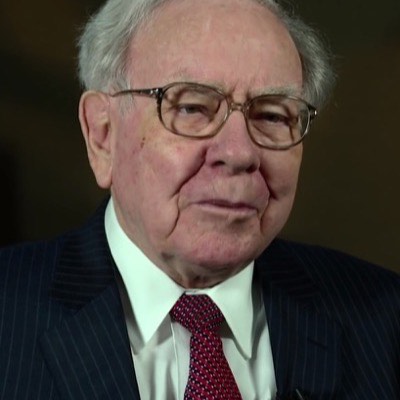 Warren Buffett Warren Buffett | Peter Lynch |
|---|---|---|
| Investment philosophy | Own a few businesses with durable advantages, understood deeply. | Examine as many companies as possible and buy the ones whose story is clear. |
| Risk philosophy | Risk is permanent loss, avoided by only buying what he can judge. | Risk is owning something whose story you cannot state in two sentences. |
| Valuation approach | Discounted future cash, applied where economics are predictable. | Earnings growth measured against the multiple being paid. |
| Portfolio construction | Very concentrated, with individual positions running to tens of billions. | Extremely broad, at times more than a thousand holdings. |
| Diversification | Protection against not knowing what you are doing. | A by-product of covering a very large number of companies. |
| Market timing | Not attempted. Cash is held until a price appears. | Not attempted, and forecasting the economy is treated as wasted effort. |
| Economic beliefs | Deliberately absent from decisions. | Deliberately absent, and openly derided. |
Scroll the table sideways on a narrow screen. Each dimension is explained in full below.
Investment philosophy
Own a few businesses with durable advantages, understood deeply.
Examine as many companies as possible and buy the ones whose story is clear.
Buffett's edge comes from depth on a small number of names inside a defined circle of competence. Lynch's came from breadth, from covering ground institutional research neglected and reaching companies before analysts did.
Risk philosophy
Risk is permanent loss, avoided by only buying what he can judge.
Risk is owning something whose story you cannot state in two sentences.
Both locate risk in the investor's understanding rather than in price movement. Lynch's test is deliberately lower and faster, because a manager assessing hundreds of companies cannot apply Buffett's standard to any of them.
Valuation approach
Discounted future cash, applied where economics are predictable.
Earnings growth measured against the multiple being paid.
Lynch popularised comparing the price-to-earnings ratio with the growth rate, a rough test usable across hundreds of names. Buffett's method is slower and produces a number for one company at a time.
Portfolio construction
Very concentrated, with individual positions running to tens of billions.
Extremely broad, at times more than a thousand holdings.
This is the sharpest split. Buffett has said he would rather own a few companies he understands than a hundred he does not. Lynch treated the long tail as a research pipeline, with small stakes bought to justify following a company closely.
Diversification
Protection against not knowing what you are doing.
A by-product of covering a very large number of companies.
Lynch never argued for diversification as risk control. His breadth followed from the search process, and he maintained that a portfolio needs only a few very large winners with the rest being the cost of finding them.
Market timing
Not attempted. Cash is held until a price appears.
Not attempted, and forecasting the economy is treated as wasted effort.
They agree. Lynch's formulation is the blunter one: the time spent predicting interest rates would be better spent reading one more annual report.
Economic beliefs
Deliberately absent from decisions.
Deliberately absent, and openly derided.
Another genuine agreement. Neither has built a position on a macroeconomic view, and both have said the answerable questions are about individual companies.
Famous books
- The Essays of Warren BuffettWarren Buffett
Not written as a book. Lawrence Cunningham arranged passages from the Berkshire shareholder letters by subject, with Buffett's cooperation, so the material is his and the structure is not. It is the closest thing to a systematic statement of his thinking, covering governance, accounting, valuation and mergers in his own words. Readers who find the annual letters scattered usually find this version far easier to follow.
- The Snowball2008Warren Buffett
Alice Schroeder's authorised biography, written with years of access to Buffett and the people around him. Its value is that it is not a tribute: it covers the personal cost of his single-mindedness alongside the investment record. It remains the fullest account of how he actually spent his time and made decisions.
- Buffett: The Making of an American Capitalist1995Warren Buffett
Roger Lowenstein's earlier biography, written without Buffett's cooperation and stronger on the business history as a result. It traces the partnership years and the transformation of Berkshire in more detail than later accounts. A useful corrective for anyone who has only read the authorised version.
- One Up on Wall Street1989Peter Lynch
Written with John Rothchild and the book that made him famous outside the industry. It sets out the six company categories, the argument that individuals hold real advantages over professionals, and the research process he expected readers to follow. It became influential because it arrived with a public record behind it, so the claim that an amateur could do this work was hard to dismiss. It is still the standard first recommendation for anyone wanting to analyse individual companies.
- Beating the Street1993Peter Lynch
The practical follow-up, built around worked examples of decisions he actually made at Magellan, including several that went wrong. Its most useful section walks through how he prepared for and conducted company visits. Less quoted than the first book and more useful to anyone who has already accepted the argument and wants the method.
- Learn to Earn1995Peter Lynch
Written with John Rothchild for readers with no background at all, including teenagers. It covers what a company is, why shares exist and how a business is financed before any question of picking one arises. Worth knowing about mainly as the entry point below the other two.
Famous quotes
Warren Buffett“Price is what you pay. Value is what you get.”
“We simply attempt to be fearful when others are greedy and to be greedy only when others are fearful.”
“Know what you own, and know why you own it.”
“Far more money has been lost by investors preparing for corrections than has been lost in corrections themselves.”
Biggest successes
- Ran Buffett Partnership Ltd from 1956 and closed it in 1969 by choice, returning capital because he could no longer find opportunities he understood. Voluntarily shutting a successful fund rather than lowering the standard is rare in the industry, and it established the discipline his later record depended on.
- Bought National Indemnity in 1967, which mattered far more than its size suggested. Insurance premiums are collected before claims are paid, and that pool of money gave Berkshire investable capital no lender could withdraw, turning a stock-picking vehicle into a permanent-capital compounding machine.
- Acquired See's Candies in 1972 at a price well above its book value. It broke the Graham rule he had trained on and worked anyway, which is why he credits it with converting him from buying cheap companies to paying fair prices for durable ones.
- Ran Fidelity's Magellan Fund from 1977 to 1990, taking it from a small vehicle closed to new money to the largest mutual fund in the United States. The record it produced over those thirteen years is among the most studied in the industry, and it was built on company research rather than on any macroeconomic call.
- Visited companies and spoke to management on a scale almost no other manager attempted, at times holding well over a thousand positions. The breadth was the strategy: examining far more businesses than a conventional manager gave him more chances of finding the few that were obviously mispriced.
- Wrote One Up on Wall Street in 1989, which reached a readership investment books had never touched. It mattered because it argued, credibly and from a public record, that a non-professional could research a company, and it changed who believed stock analysis was available to them.
Biggest criticisms
A balanced view includes the main criticisms of each approach, presented neutrally.
- Technology is the longest-running charge. Critics argued that avoiding an entire sector for decades was not discipline but a refusal to learn, and that the circle of competence had become a justification for standing still. Supporters replied that he sat out the late-1990s boom and therefore also the bust that followed, and that declining to value what you cannot value is the method working. What actually happened complicates both readings: Berkshire eventually made Apple its largest holding, which critics treat as an admission and supporters treat as the circle widening on evidence rather than on enthusiasm.
- Scale is the criticism he makes himself. Critics point out that a company of Berkshire's size cannot buy anything small enough to matter, so the opportunity set has narrowed to a handful of very large deals. Supporters answer that permanent capital and a reputation that brings deals to the door are advantages nobody else has. The record suggests the critics have the better of it: Berkshire's results have moved steadily closer to the broad market as it has grown, and Buffett has told shareholders directly not to expect the early rates again.
- Whether the method transfers is genuinely contested. Critics argue the record rests on insurance float, permanent capital and preferential terms in private deals, none of which an individual can obtain, so studying him teaches habits that cannot be executed. Supporters distinguish the structure from the principles and note that the reasoning about business quality and price survives without the balance sheet. History gives a mixed verdict: investors who took the principles have generally done better than those who tried to replicate the machinery.
- His most famous phrase has done real damage. Critics argue that invest in what you know is routinely taken as permission to buy a company because you like its product, which skips the research the phrase was meant to introduce. Supporters point out that Lynch spent years saying exactly this and devoted whole chapters to the work that follows the observation. History is unkind to both: the slogan spread and the chapters did not, which suggests a message this easy to misread carries some responsibility for the misreading.
- The era did a great deal of the work. Critics note that 1977 to 1990 was an exceptional stretch for American equities and especially for the smaller companies he favoured, and that a strategy tested only in a rising market has not really been tested. Supporters answer that he also navigated the 1987 crash without abandoning the approach. What can be said is that no comparable manager has reproduced the record since, which points at conditions as much as at method.
- Investors in the fund did much worse than the fund. Fidelity's own later analysis found that the average Magellan investor earned far less than the fund reported, because money arrived after good years and left after bad ones. Supporters observe that this is a fact about investor behaviour rather than about Lynch. Critics reply that a manager who attracts money he cannot stop people mistiming is producing a return most of his customers will never see, which is a real limitation on what the record demonstrates.
Lessons investors can learn
Plain-English takeaways. Context for learning, not advice to buy or sell anything.
- 1How many companies you can own is set by how much work each one requires, not by preference.
- 2A quick, checkable test that scales across hundreds of names is a different tool from a deep valuation of one.
- 3Two investors can agree completely about what to ignore and still build opposite portfolios.
Who each approach suits
Investors who prefer to know a small number of businesses thoroughly and who are comfortable doing nothing for long stretches.
Investors who enjoy the search itself, who will read widely across many companies, and who accept that most holdings will be unremarkable.
Common misconceptions
- The claim
Lynch was a value investor like Buffett.
What is actually the caseHe was willing to pay up for growth and owned companies with no durable advantage at all if the earnings arithmetic worked. The overlap is that both researched businesses; the criteria were different.
- The claim
Buffett holds forever and Lynch traded constantly.
What is actually the caseLynch held individual positions for around three years on average, which is long by fund standards. The turnover came from the number of names being cycled through, not from short holding periods on each.
Frequently asked questions
Who held more stocks, Buffett or Lynch?
Lynch, by an enormous margin. Magellan at times held well over a thousand positions, while Berkshire's equity portfolio has usually been concentrated in a few dozen names with the largest handful accounting for most of the value.
Did Buffett and Lynch use the same valuation method?
No. Buffett estimates the cash a business will produce and discounts it, which is slow and only works on predictable economics. Lynch compared the price-to-earnings ratio against the growth rate, a faster and rougher test that can be applied across hundreds of companies.
Which approach suits an individual investor better?
That depends on whether you enjoy the search. Lynch's method rewards curiosity across many companies and tolerates being wrong often. Buffett's rewards patience and depth on very few, and requires being comfortable doing nothing for long periods.
Did they agree on anything?
On more than the portfolios suggest. Both ignore macroeconomic forecasting, both research businesses rather than price charts, both hold for years rather than months, and both regard reacting to market declines as the main way investors damage their own results.
Why did Lynch own so many companies?
Because breadth was the strategy. He argued that examining far more businesses than a conventional manager produces more chances of finding a few that are obviously mispriced, and that small positions were worth holding simply to justify following a company closely.
Investing philosophies behind this debate
Schools of thought one or both of these investors are associated with.
Strategies these investors are associated with
What the disagreement looks like as an actual way of running a portfolio.
Related guides
Related concepts
Related tools
Hubs and trackers
Read the full profiles
Related investors
 Benjamin GrahamAuthor and early architect of value investing
 Charlie MungerLongtime vice chairman of Berkshire HathawayPhilip FisherGrowth investor and author of Common Stocks and Uncommon ProfitsWalter SchlossValue investor who worked under Benjamin GrahamJoel GreenblattFounder of Gotham Capital and authorJohn TempletonFounder of the Templeton Growth Fund
More comparisons
Get smarter about investing
Clear market insights, useful tools, and beginner-friendly investing education.
Educational content only. This is a neutral comparison compiled for learning. It is not an endorsement of either approach, not investment advice, and not a claim that either person is always right. Mentioning someone here does not imply they are affiliated with Money Masters Media.