
Warren Buffett vs Charlie Munger
Overview
Comparing these two is less about disagreement than about division of labour, and the honest version says so. They worked together for more than sixty years and converged on nearly every question, which is why the places they did not converge are worth isolating.
The substantive difference is one of instinct. Buffett's starting position was Graham's: find something cheap enough that the price protects you. Munger arrived with no such training and considerably more impatience for mediocre businesses, and it was his argument, not Buffett's own reflection, that moved Berkshire toward quality.
Quick comparison
| Dimension | 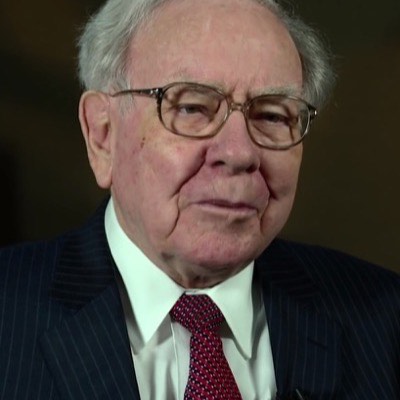 Warren Buffett Warren Buffett |  Charlie Munger Charlie Munger |
|---|---|---|
| Investment philosophy | Buy understandable businesses with durable advantages at sensible prices. | The same, arrived at first and argued for against resistance. |
| Risk philosophy | Risk is permanent loss, managed through the circle of competence. | Risk is error, managed by cataloguing the ways people reliably make it. |
| Valuation approach | Discounted future cash, applied only to predictable economics. | The same arithmetic, reached through a broader set of models. |
| Portfolio construction | Concentrated, though moderated by Berkshire's scale and cash needs. | More concentrated still, and comfortable with far fewer positions. |
| Diversification | Unnecessary for someone who understands what they own. | Actively harmful, and a confession of ignorance. |
| Market timing | No forecasting. Hold cash and wait for a price. | No forecasting. Waiting is the job rather than the preparation for it. |
| Economic beliefs | Deliberately absent from investment decisions. | Interested in economics as one model among many, not as a forecast. |
Scroll the table sideways on a narrow screen. Each dimension is explained in full below.
Investment philosophy
Buy understandable businesses with durable advantages at sensible prices.
The same, arrived at first and argued for against resistance.
Munger held the quality position before Buffett did and spent years making the case. Buffett has said plainly that Munger moved him away from cigar butts, and that the shift accounts for most of Berkshire's later results.
Risk philosophy
Risk is permanent loss, managed through the circle of competence.
Risk is error, managed by cataloguing the ways people reliably make it.
Buffett approaches risk through the business: understand it and you can judge it. Munger approaches it through the decider, arguing in The Psychology of Human Misjudgment that mistakes are patterned rather than random and can therefore be defended against with a checklist.
Valuation approach
Discounted future cash, applied only to predictable economics.
The same arithmetic, reached through a broader set of models.
They do not differ meaningfully on method. Munger's addition is the insistence that a valuation be stress-tested against psychology, incentives and competitive dynamics rather than only against the numbers.
Portfolio construction
Concentrated, though moderated by Berkshire's scale and cash needs.
More concentrated still, and comfortable with far fewer positions.
Munger ran his own partnership from 1962 to 1975 with a portfolio narrow enough to fall severely in the 1973 to 1974 bear market, and did not change course. His stated view was that three good businesses are plenty.
Diversification
Unnecessary for someone who understands what they own.
Actively harmful, and a confession of ignorance.
This is the sharpest difference in emphasis between them. Buffett accepts diversification as sensible for people who are not full-time investors and recommends index funds on exactly that basis. Munger was more categorical and had less patience for the compromise.
Market timing
No forecasting. Hold cash and wait for a price.
No forecasting. Waiting is the job rather than the preparation for it.
Both treat inactivity as a position. Munger stated it more bluntly, arguing that an investor earns the right to act decisively by having declined to act for long stretches beforehand.
Economic beliefs
Deliberately absent from investment decisions.
Interested in economics as one model among many, not as a forecast.
Munger read widely in economics and used it as part of his latticework, but neither man made a purchase because of a view on rates or growth.
Famous books
- The Essays of Warren BuffettWarren Buffett
Not written as a book. Lawrence Cunningham arranged passages from the Berkshire shareholder letters by subject, with Buffett's cooperation, so the material is his and the structure is not. It is the closest thing to a systematic statement of his thinking, covering governance, accounting, valuation and mergers in his own words. Readers who find the annual letters scattered usually find this version far easier to follow.
- The Snowball2008Warren Buffett
Alice Schroeder's authorised biography, written with years of access to Buffett and the people around him. Its value is that it is not a tribute: it covers the personal cost of his single-mindedness alongside the investment record. It remains the fullest account of how he actually spent his time and made decisions.
- Buffett: The Making of an American Capitalist1995Warren Buffett
Roger Lowenstein's earlier biography, written without Buffett's cooperation and stronger on the business history as a result. It traces the partnership years and the transformation of Berkshire in more detail than later accounts. A useful corrective for anyone who has only read the authorised version.
- Poor Charlie's Almanack2005Charlie Munger
Compiled and edited by Peter Kaufman rather than written by Munger, which is why it reads as a collection rather than an argument. It gathers his major talks, including The Psychology of Human Misjudgment and Elementary Worldly Wisdom, alongside commentary and the Franklin-style aphorisms he favoured. It became influential because nothing else assembled the latticework idea in one place, and because Munger never wrote a conventional book. Readers usually find it worth skipping to the talks first.
- Damn Right2000Charlie Munger
Janet Lowe's biography, written with Munger's cooperation and covering the law career, the partnership years and the early Berkshire period that his own talks mostly skip. It is the main source for his life before he became well known. Useful for understanding where the temperament came from rather than for method.
Famous quotes
Warren Buffett“Price is what you pay. Value is what you get.”
“We simply attempt to be fearful when others are greedy and to be greedy only when others are fearful.”
Charlie Munger“The big money is not in the buying and selling, but in the waiting.”
“Invert, always invert: turn a situation or problem upside down.”
Biggest successes
- Ran Buffett Partnership Ltd from 1956 and closed it in 1969 by choice, returning capital because he could no longer find opportunities he understood. Voluntarily shutting a successful fund rather than lowering the standard is rare in the industry, and it established the discipline his later record depended on.
- Bought National Indemnity in 1967, which mattered far more than its size suggested. Insurance premiums are collected before claims are paid, and that pool of money gave Berkshire investable capital no lender could withdraw, turning a stock-picking vehicle into a permanent-capital compounding machine.
- Acquired See's Candies in 1972 at a price well above its book value. It broke the Graham rule he had trained on and worked anyway, which is why he credits it with converting him from buying cheap companies to paying fair prices for durable ones.
- Persuaded Buffett to pay well above book value for See's Candies in 1972. This is the single most consequential thing he did, because it broke the rule Berkshire had been built on and worked, redirecting the company from buying discarded assets toward owning businesses with pricing power.
- Co-founded the law firm Munger, Tolles and Olson in 1962, which still operates under that name. He left the practice of law behind but the firm gave him the financial independence to invest on his own terms rather than someone else's.
- Ran his own investment partnership from 1962 until 1975, holding a concentrated portfolio through the severe bear market of 1973 and 1974 rather than reducing risk. The episode is why his advocacy of concentration carries weight: he lived through what it costs.
Biggest criticisms
A balanced view includes the main criticisms of each approach, presented neutrally.
- Technology is the longest-running charge. Critics argued that avoiding an entire sector for decades was not discipline but a refusal to learn, and that the circle of competence had become a justification for standing still. Supporters replied that he sat out the late-1990s boom and therefore also the bust that followed, and that declining to value what you cannot value is the method working. What actually happened complicates both readings: Berkshire eventually made Apple its largest holding, which critics treat as an admission and supporters treat as the circle widening on evidence rather than on enthusiasm.
- Scale is the criticism he makes himself. Critics point out that a company of Berkshire's size cannot buy anything small enough to matter, so the opportunity set has narrowed to a handful of very large deals. Supporters answer that permanent capital and a reputation that brings deals to the door are advantages nobody else has. The record suggests the critics have the better of it: Berkshire's results have moved steadily closer to the broad market as it has grown, and Buffett has told shareholders directly not to expect the early rates again.
- Whether the method transfers is genuinely contested. Critics argue the record rests on insurance float, permanent capital and preferential terms in private deals, none of which an individual can obtain, so studying him teaches habits that cannot be executed. Supporters distinguish the structure from the principles and note that the reasoning about business quality and price survives without the balance sheet. History gives a mixed verdict: investors who took the principles have generally done better than those who tried to replicate the machinery.
- Concentration is the substantive objection. Critics argued that holding very few positions converts a good process into a bet on being right, and that his own partnership's severe decline in 1973 and 1974 shows what that costs. Supporters answered that diversification protects against ignorance rather than risk, and that an investor who has genuinely done the work is diluting rather than protecting. What history suggests is narrower than either claim: concentration worked for someone with permanent capital, no clients able to withdraw, and a temperament that could sit through a halving, and those conditions describe very few people.
- His manner drew consistent complaint. Critics found the bluntness dismissive, particularly when he ruled out whole categories in a sentence, and argued it discouraged the disagreement his own method depended on. Supporters saw the directness as the point, a refusal to soften a conclusion for comfort, and noted he was equally blunt about his own errors. Both are visible in the transcripts, and the meetings he ran were unusually candid by industry standards even when the delivery was harsh.
- Several of his firmest positions look worse with time. He dismissed cryptocurrency in categorical terms and was scathing about companies and sectors that went on to succeed. Supporters point out that he explicitly accepted missing things as the price of staying inside a circle of competence, and that avoiding an entire category is cheap if you never needed it. Critics reply that a framework which cannot distinguish a genuine innovation from a fashion is doing less work than it claims. The record shows both a substantial cost in opportunities and a substantial saving in avoided losses.
Lessons investors can learn
Plain-English takeaways. Context for learning, not advice to buy or sell anything.
- 1A partnership where one person is expected to argue against the other is a structural advantage, not a personality clash.
- 2The most valuable contribution to a process can be the objection that changes what it buys.
- 3Studying how decisions fail is a different discipline from studying how businesses work, and both are needed.
Who each approach suits
Investors who want a worked example of applying business analysis at scale over decades, explained in public as it happened.
Readers who want the thinking apparatus underneath the decisions, including the psychology, and who prefer a blunt account to a diplomatic one.
Common misconceptions
- The claim
Munger was Buffett's junior partner and mostly agreed.
What is actually the caseHe held the smaller stake and did not make the final calls, but the shift toward quality businesses was his argument made against Buffett's training, and Buffett has credited it repeatedly.
- The claim
They had the same background.
What is actually the caseBuffett studied under Graham and worked at Graham-Newman. Munger trained as a lawyer, never took an undergraduate degree, and came to investing through a completely different route, which is part of why he saw the problem differently.
Frequently asked questions
What did Charlie Munger actually change about Berkshire?
He argued that Berkshire should stop buying statistically cheap but weak companies and start paying fair prices for durable ones. See's Candies in 1972, bought well above book value, was the test case. It worked, and every large purchase afterwards followed the new logic.
Did Buffett and Munger ever disagree publicly?
Rarely on investments and more often on emphasis. Munger was markedly more hostile to diversification and to entire asset categories, and considerably blunter in how he said so. On the substance of what Berkshire owned they were closely aligned for decades.
Who was the better investor?
That is not a question the record can settle and this page does not attempt it. They ran one portfolio together for most of their careers, Munger held the smaller stake, and separating an argument's contribution from a decision's is not possible from outside.
What is the latticework of mental models?
Munger's term for the handful of load-bearing ideas from economics, psychology, biology, engineering and mathematics, learned well enough to be applied without effort. His argument was that most bad decisions come from using one discipline on a problem that belongs to several.
Should an investor read both?
They cover different ground. Buffett's shareholder letters explain how businesses were analysed and bought; Munger's talks explain how to think and, more often, how not to. Neither substitutes for the other and Munger is much the shorter read.
Investing philosophies behind this debate
Schools of thought one or both of these investors are associated with.
Strategies these investors are associated with
What the disagreement looks like as an actual way of running a portfolio.
Related guides
Related concepts
Related tools
Hubs and trackers
Read the full profiles
Related investors
More comparisons
Get smarter about investing
Clear market insights, useful tools, and beginner-friendly investing education.
Educational content only. This is a neutral comparison compiled for learning. It is not an endorsement of either approach, not investment advice, and not a claim that either person is always right. Mentioning someone here does not imply they are affiliated with Money Masters Media.