
Benjamin Graham vs Warren Buffett
Overview
This is the only pairing on the site where one person explicitly taught the other, and where the student has spent sixty years explaining why he stopped doing it the way he was taught. Graham gave Buffett the framework, the vocabulary and the temperament, and Buffett has never stopped crediting him for all three. What he abandoned was the specific instruction about what to buy.
The disagreement is narrow and consequential. Both men separate price from value and both insist on a discount. They differ on where value comes from: Graham located it in assets a liquidator could count, while Buffett came to locate it in an ability to keep charging more than it costs to produce, which no balance sheet records.
Quick comparison
| Dimension | 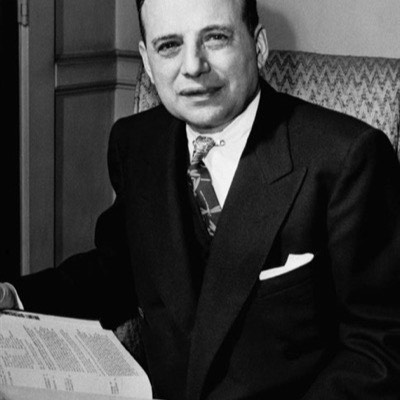 Benjamin Graham Benjamin Graham | 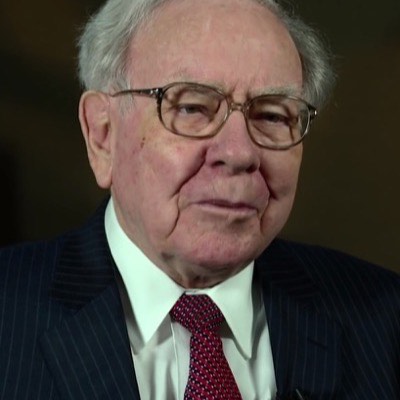 Warren Buffett Warren Buffett |
|---|---|---|
| Investment philosophy | A share is a claim on assets, valued from the published accounts. | A share is a fraction of a business, valued by the cash it will produce. |
| Risk philosophy | Risk is overpaying relative to tangible worth, handled by a numeric discount. | Risk is permanent impairment of the business, handled by understanding it. |
| Valuation approach | Net current assets, book value and earnings multiples. | Discounted future cash, with the discount applied to a durable franchise. |
| Portfolio construction | Many small positions, because any one of them may be cheap for a real reason. | Few large positions, because good businesses at fair prices are rare. |
| Diversification | Wide diversification is a requirement of the method. | Diversification is protection against not knowing what you are doing. |
| Market timing | Never. Mr Market's quotes are offers to accept or ignore. | Never, though holding cash until a price appears is not the same thing. |
| Economic beliefs | Largely absent. The method was designed to work without a macro view. | Largely absent, and deliberately so. |
Scroll the table sideways on a narrow screen. Each dimension is explained in full below.
Investment philosophy
A share is a claim on assets, valued from the published accounts.
A share is a fraction of a business, valued by the cash it will produce.
Graham wanted evidence that did not depend on judgment about the future, which meant the balance sheet. Buffett, pushed by Charlie Munger, decided that the durable ability to raise prices is worth more than a pile of countable assets, and accepted the forecasting that comes with it.
Risk philosophy
Risk is overpaying relative to tangible worth, handled by a numeric discount.
Risk is permanent impairment of the business, handled by understanding it.
For Graham the margin of safety is arithmetic: buy far enough below the estimate and ordinary error cannot become a loss. Buffett kept the phrase but changed its content, treating a business he can genuinely understand as the primary protection and the discount as secondary.
Valuation approach
Net current assets, book value and earnings multiples.
Discounted future cash, with the discount applied to a durable franchise.
Graham's famous screen looked for companies priced below cash and receivables after all liabilities. Buffett uses the discounted cash formulation he credits to John Burr Williams, which requires forecasting a decade out and is therefore only applied where he thinks the economics are predictable.
Portfolio construction
Many small positions, because any one of them may be cheap for a real reason.
Few large positions, because good businesses at fair prices are rare.
The structural difference follows directly from the valuation difference. A statistical bargain works as a basket; a judgment about a franchise works as a concentrated holding, and Buffett has said he would rather own a handful of companies he understands than a hundred he does not.
Diversification
Wide diversification is a requirement of the method.
Diversification is protection against not knowing what you are doing.
This is a genuine reversal rather than a matter of degree. Graham diversified because he expected individual picks to fail; Buffett concentrated because he expected to be right about a small number, and both positions are internally consistent with their respective definitions of value.
Market timing
Never. Mr Market's quotes are offers to accept or ignore.
Never, though holding cash until a price appears is not the same thing.
Neither man forecasts. Graham's Mr Market removes timing from the question entirely. Buffett will sit on a very large cash balance for years, which looks like timing and is better described as a refusal to lower the standard, and he committed heavily during the 2008 credit freeze for exactly that reason.
Economic beliefs
Largely absent. The method was designed to work without a macro view.
Largely absent, and deliberately so.
This is one of the dimensions where they simply agree. Both treat macroeconomic forecasting as outside the work, and Buffett has said repeatedly that he has never made a decision based on a view about the economy.
Famous books
- Security Analysis1934Benjamin Graham
Written with David Dodd and still the reference point for the discipline. It set out how to value a security from its published accounts, covering bonds and preferred stock as carefully as ordinary shares. It became influential because it arrived when the case for equities had collapsed entirely and offered a way to distinguish a sound security from a wrecked one. It is a technical book and most readers should start elsewhere.
- The Intelligent Investor1949Benjamin Graham
His book for non-professionals, built around the margin of safety, the Mr Market metaphor and the split between defensive and enterprising investors. Buffett has called it the best book on investing ever written, singling out the chapters on market fluctuations and on the margin of safety. Its durability comes from being about temperament as much as technique, which is the part that has not dated. Most readers now meet it in the annotated edition.
- The Interpretation of Financial Statements1937Benjamin Graham
A short guide to reading a balance sheet and an income statement, written for people with no accounting background. It is the least famous of the three and the most immediately practical. Anyone who finds Security Analysis impenetrable usually finds this is the missing step.
- The Essays of Warren BuffettWarren Buffett
Not written as a book. Lawrence Cunningham arranged passages from the Berkshire shareholder letters by subject, with Buffett's cooperation, so the material is his and the structure is not. It is the closest thing to a systematic statement of his thinking, covering governance, accounting, valuation and mergers in his own words. Readers who find the annual letters scattered usually find this version far easier to follow.
- The Snowball2008Warren Buffett
Alice Schroeder's authorised biography, written with years of access to Buffett and the people around him. Its value is that it is not a tribute: it covers the personal cost of his single-mindedness alongside the investment record. It remains the fullest account of how he actually spent his time and made decisions.
- Buffett: The Making of an American Capitalist1995Warren Buffett
Roger Lowenstein's earlier biography, written without Buffett's cooperation and stronger on the business history as a result. It traces the partnership years and the transformation of Berkshire in more detail than later accounts. A useful corrective for anyone who has only read the authorised version.
Famous quotes
Benjamin Graham“In the short run, the market is a voting machine, but in the long run it is a weighing machine.”
“The intelligent investor is a realist who sells to optimists and buys from pessimists.”
Warren Buffett“Price is what you pay. Value is what you get.”
“We simply attempt to be fearful when others are greedy and to be greedy only when others are fearful.”
Biggest successes
- Published Security Analysis with David Dodd in 1934, at the lowest point of the Depression and when confidence in equities had collapsed. It mattered because it replaced reputation and tips with a repeatable procedure, and it created security analysis as a discipline rather than a trade.
- Wrote The Intelligent Investor in 1949 for readers who were not professionals. It has stayed continuously in print for more than seventy years, which makes it the route by which most people still encounter the idea that price and value are different things.
- Bought a large stake in the insurer GEICO for the partnership in 1948. The position grew to outweigh everything else the partnership owned combined, and the irony is instructive: his single best result came from a concentrated holding of a growing business, which his own rules would have discouraged.
- Ran Buffett Partnership Ltd from 1956 and closed it in 1969 by choice, returning capital because he could no longer find opportunities he understood. Voluntarily shutting a successful fund rather than lowering the standard is rare in the industry, and it established the discipline his later record depended on.
- Bought National Indemnity in 1967, which mattered far more than its size suggested. Insurance premiums are collected before claims are paid, and that pool of money gave Berkshire investable capital no lender could withdraw, turning a stock-picking vehicle into a permanent-capital compounding machine.
- Acquired See's Candies in 1972 at a price well above its book value. It broke the Graham rule he had trained on and worked anyway, which is why he credits it with converting him from buying cheap companies to paying fair prices for durable ones.
Biggest criticisms
A balanced view includes the main criticisms of each approach, presented neutrally.
- The clearest objection is that his method stopped finding anything. Critics argue that companies trading below net current assets were a product of the Depression and of an era before screening was computerised, and that the supply largely disappeared once everyone could run the filter. Supporters reply that the principle, buying at a discount to a conservative estimate, survives even when that particular screen is empty. The record favours the critics on the specific test and the supporters on the general one: deep bargains of that kind are now rare outside distressed corners, while the underlying logic remains in use.
- His framework struggles with businesses whose value is not on the balance sheet. Critics point out that a company whose main asset is software, a brand or a research pipeline will look expensive on every measure he used, so the method systematically avoids exactly the businesses that have compounded most since. Supporters answer that Graham designed it to avoid unquantifiable judgments on purpose. What followed is that his own best pupils moved on: Buffett has said explicitly that paying up for quality, which Graham resisted, produced most of Berkshire's results.
- Cheapness alone is a well-documented trap. Critics note that a low price often reflects a business in genuine decline, and that a purely statistical approach buys the falling knife along with the bargain. Supporters emphasise that Graham never advocated concentration in such names and insisted on wide diversification for exactly this reason. Later research broadly supports his structure rather than his critics here, since the value effect has generally shown up across baskets of cheap stocks rather than in individual picks.
- Technology is the longest-running charge. Critics argued that avoiding an entire sector for decades was not discipline but a refusal to learn, and that the circle of competence had become a justification for standing still. Supporters replied that he sat out the late-1990s boom and therefore also the bust that followed, and that declining to value what you cannot value is the method working. What actually happened complicates both readings: Berkshire eventually made Apple its largest holding, which critics treat as an admission and supporters treat as the circle widening on evidence rather than on enthusiasm.
- Scale is the criticism he makes himself. Critics point out that a company of Berkshire's size cannot buy anything small enough to matter, so the opportunity set has narrowed to a handful of very large deals. Supporters answer that permanent capital and a reputation that brings deals to the door are advantages nobody else has. The record suggests the critics have the better of it: Berkshire's results have moved steadily closer to the broad market as it has grown, and Buffett has told shareholders directly not to expect the early rates again.
- Whether the method transfers is genuinely contested. Critics argue the record rests on insurance float, permanent capital and preferential terms in private deals, none of which an individual can obtain, so studying him teaches habits that cannot be executed. Supporters distinguish the structure from the principles and note that the reasoning about business quality and price survives without the balance sheet. History gives a mixed verdict: investors who took the principles have generally done better than those who tried to replicate the machinery.
Lessons investors can learn
Plain-English takeaways. Context for learning, not advice to buy or sell anything.
- 1A margin of safety can be built from assets or from business quality, but something has to absorb the error.
- 2How concentrated you should be follows from what kind of evidence you are relying on, not from preference.
- 3Being taught a method well enough to know where it stops working is the point of studying anyone.
Who each approach suits
Investors who want a rules-based process that does not require forecasting, and who are willing to hold many positions and check them mechanically.
Investors willing to do deep qualitative work on a small number of businesses, and temperamentally able to hold them through long periods of nothing happening.
Common misconceptions
- The claim
Buffett rejected Graham.
What is actually the caseHe kept the framework, the margin of safety and the Mr Market discipline for his whole career. What he left behind was the instruction to buy statistically cheap companies regardless of their quality.
- The claim
Graham only ever bought cheap junk.
What is actually the caseHis single best result was a large concentrated position in GEICO, a growing insurer, which outweighed his entire diversified book of statistical bargains and which his own rules would have discouraged.
Frequently asked questions
Did Warren Buffett abandon Benjamin Graham's approach?
Partly. He kept the core separation of price from value and the insistence on a margin of safety, both of which he still credits to Graham. What he moved away from was buying companies purely because they were statistically cheap, in favour of paying fair prices for businesses with durable advantages.
What is the main difference between Graham and Buffett?
Where they locate value. Graham found it in assets a liquidator could count from the published accounts, which requires no forecast. Buffett finds it in a business's durable ability to charge more than it costs to produce, which cannot be read off a balance sheet and requires judgment about the future.
Who influenced Buffett to change his approach?
Charlie Munger, who argued that a business able to raise prices for decades is worth paying a fair price for. The 1972 purchase of See's Candies, made well above book value, broke the Graham rule and worked, and Buffett has described it as the decision that converted him.
Is Graham's method still usable today?
The specific screen is much harder to run, because companies trading below net current assets were largely a product of the Depression and of an era before computerised screening. The underlying principle, buying at a discount to a conservative estimate, remains in wide use.
Which one should a beginner study first?
Graham, because the reasoning is explicit and requires no judgment about business quality, which is the harder skill. The Intelligent Investor is written for non-professionals; Buffett's thinking is spread across sixty years of shareholder letters and assumes the Graham framework already.
Investing philosophies behind this debate
Schools of thought one or both of these investors are associated with.
Strategies these investors are associated with
What the disagreement looks like as an actual way of running a portfolio.
Related guides
Related concepts
Related tools
Hubs and trackers
Read the full profiles
Related investors

More comparisons
Get smarter about investing
Clear market insights, useful tools, and beginner-friendly investing education.
Educational content only. This is a neutral comparison compiled for learning. It is not an endorsement of either approach, not investment advice, and not a claim that either person is always right. Mentioning someone here does not imply they are affiliated with Money Masters Media.