
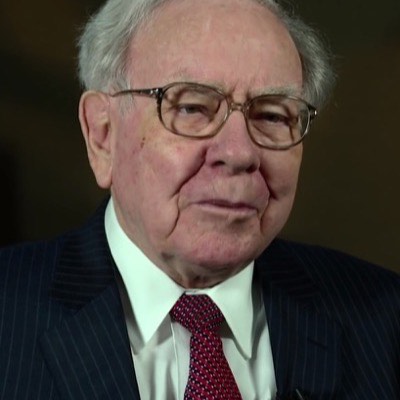
Jeff Bezos
Founder of Amazon
Born 1964
Built Amazon from an online bookseller into a retail and cloud computing company, writing annual letters on long-term thinking and customer focus.
Biography
Jeff Bezos is an American entrepreneur, born in Albuquerque, New Mexico in 1964, who founded Amazon in 1994 and ran it as chief executive until 2021. He is unusual among company builders in having left a written record of his reasoning: the annual shareholder letters, beginning in 1997 and reprinting that first letter every year since, form one of the few primary sources in which an operator explains a capital-allocation philosophy in the same language an investor would use to test it.
He came to the idea from finance rather than retail, working at the quantitative firm D. E. Shaw before leaving to start an online bookseller. Amazon.com opened in July 1995 and went public in 1997, and the 1997 letter set out the terms the company would be judged on. It said explicitly that Amazon would make decisions for long-term market leadership rather than short-term profitability, that it would take reasoned risks that mostly would not pay off, and that shareholders who disagreed with that ordering should know it in advance.
The most consequential financial statement he made came in the 2004 letter, which named free cash flow per share as the company’s ultimate financial measure and explained why: earnings do not translate directly into cash, and a share is worth the present value of its future cash flows rather than its future earnings. The letter went further than most operators would, noting that a company can impair shareholder value in some circumstances by growing earnings. That is a claim about accounting most chief executives would rather not make out loud.
The reinvestment those letters justified produced the businesses Amazon is now valued on. Amazon Web Services launched in 2006 out of internal infrastructure work and became the profit engine that funded a long stretch of retail investment. The Kindle followed in 2007 and the Prime membership programme reshaped the customer relationship. Bezos stepped down as chief executive in 2021, handing the role to Andy Jassy and becoming executive chair.
Career timeline
- 1964Born in Albuquerque, New Mexico.
- 1990sWorks at the quantitative investment firm D. E. Shaw before leaving to start a company.
- 1994Founds Amazon; the site opens to the public in July 1995 as an online bookseller.
- 1997Amazon goes public. The first shareholder letter sets out the long-term framing reprinted every year since.
- 2000Founds the space company Blue Origin.
- 2004The shareholder letter names free cash flow per share as the company’s ultimate financial measure.
- 2006Amazon Web Services launches, turning internal infrastructure into an external business.
- 2007The Kindle launches, moving the company from selling books to selling the device and the catalogue.
- 2013Buys The Washington Post personally, separately from Amazon.
- 2015The shareholder letter sets out the distinction between reversible and irreversible decisions.
- 2016The shareholder letter formalises the Day 1 and Day 2 framing of organisational decay.
- 2021Steps down as chief executive, handing the role to Andy Jassy, and becomes executive chair.
How he thought about capital
The load-bearing idea is that cash, not accounting profit, is what a business is worth. The 2004 letter states it plainly: earnings do not directly translate into cash flows, and shares are worth the present value of their future cash flows rather than of their future earnings. Working capital, capital spending and future share dilution all sit between the two, which is why a company can raise reported earnings and still be worth less. For an investor this is not a novel claim, but it is unusual to hear it from the person whose earnings are being discussed.
That premise licenses the behaviour Amazon became known for. If cash is the measure, then spending that suppresses current earnings while raising future cash is a good trade, and the fact that it makes the current period look bad is a cost worth paying. This is why Amazon could run for years with thin or negative reported profit while being, in its own framing, extremely disciplined. The framework does have an obvious failure mode, which is that it also describes a company that is simply losing money, and the difference is only visible in whether the invested cash eventually returns.
The second strand is about time horizon as a competitive advantage rather than a virtue. Bezos argued repeatedly that willingness to be misunderstood for long periods is scarce, and that a company prepared to plant something that will not bear for seven years competes against a much smaller field than one working on a two-year horizon. The Amazon Web Services decision is the strongest evidence: building external infrastructure services out of internal plumbing looked like a distraction for years before it became the segment carrying group profitability.
Third, he treated organisational decay as the main long-run risk. The 2016 letter’s formulation is blunt: Day 2 is stasis, followed by irrelevance, followed by decline. His countermeasures were procedural rather than cultural slogans. Decisions were sorted into those that can be reversed, which should be made fast and locally, and those that cannot, which deserve deliberation. Meetings opened with written narrative memos rather than slide decks, on the argument that prose forces an author to expose reasoning that bullet points let them hide.
What the framework does not include is a defence of the externalities. Customer obsession as stated is an obligation to the customer and to the shareholder, and the record shows both served. Warehouse workers, marketplace sellers and competitors appear in the letters as inputs and constraints rather than as parties with claims, and most of the sustained criticism of Amazon lives precisely in that gap.
Key ideas
Tap any idea to expand a plain-English explanation, why it matters, and where to learn more.
Free cash flow per share
Judging a business by the cash it can eventually distribute per share rather than by its reported accounting profit.
Earnings can be raised by decisions that consume cash or dilute shareholders, so the two measures can move in opposite directions.
A company can grow reported earnings while spending more cash than the growth returns, which leaves each shareholder worse off.
Reinvestment over reported earnings
Deliberately suppressing current profit to fund investments expected to produce larger cash flows later.
Where the returning cash exceeds the cash invested, the accounting picture in the middle of the build understates the business.
A retailer building fulfilment capacity ahead of demand reports weak margins for years before the network becomes an advantage.
Day 1 and Day 2
The claim that organisational decay, not competition, is the main long-run threat, and that resisting it requires deliberate mechanisms.
Large companies fail slowly and from the inside, through process replacing judgment, long before a rival takes anything from them.
Decisions that could once be made in an afternoon start requiring a committee, and nobody can point to when that changed.
Reversible and irreversible decisions
Sorting choices into those that can be undone, which should be made quickly and locally, and those that cannot, which deserve slow deliberation.
Applying the same heavy process to both kinds is the most common way a growing organisation loses its speed for no gain in quality.
Launching a product in one market can be reversed cheaply. Committing to a category of infrastructure usually cannot.
Scale economics shared
Passing cost savings from scale back to customers as lower prices instead of retaining them as margin.
Lower prices raise volume, which lowers unit cost again, which is a loop rather than a one-off transfer.
The same logic Walmart ran through physical distribution, applied to fulfilment, cloud infrastructure and marketplace fees.
Major contributions
- Published a two-decade run of shareholder letters that explain an operating and capital-allocation philosophy in terms an investor can test.
- Made free cash flow per share, rather than reported earnings, an explicit and public corporate objective.
- Built Amazon Web Services out of internal infrastructure, creating the cloud computing market as a purchasable category.
- Demonstrated at scale that a public company can sustain very long investment horizons if it states the terms in advance and repeats them.
- Popularised specific management mechanisms, including written narrative memos in place of presentations and the reversible-decision distinction.
Major successes
- Founded Amazon in 1994 and took it public in 1997 with a shareholder letter that named long-term market leadership as the objective and warned in advance that this would look wrong in any given quarter.
- Stated free cash flow per share as the company’s ultimate financial measure in the 2004 letter, and explained why growing earnings can in some circumstances reduce what a share is worth.
- Launched Amazon Web Services in 2006, turning infrastructure built for internal use into a separate business that later carried much of the group’s profitability.
- Launched the Kindle in 2007 and built the Prime membership programme, both of which changed Amazon from a place people bought things into a service they subscribed to.
- Founded Blue Origin in 2000 and bought The Washington Post in 2013, both personally rather than through Amazon, keeping the company’s capital allocation separate from his own.
- Handed the chief executive role to Andy Jassy in 2021 after a planned succession from inside the business, which is a governance outcome many founder-led companies fail to reach.
Influence on investors
The shareholder letters became a standard text for both operators and analysts. The specific argument that free cash flow rather than earnings is the object, made by someone with an incentive to argue otherwise, is now routinely cited when a company defends heavy investment against weak reported profit.
Amazon Web Services created a market rather than entering one, and the pattern of turning internal capability into an external product has since been attempted across the industry, mostly with far less success. That gap is itself informative about how rare the underlying conditions were.
The Day 1 framing and the written-memo practice spread well beyond technology and are now common in management writing, though usually detached from the accountability structures that made them work at Amazon.
Criticisms and debates
A balanced view includes the main criticisms and open debates, presented neutrally.
- Working conditions in Amazon’s warehouses have drawn sustained criticism over injury rates, productivity monitoring and the pace of work. The company has pointed to pay levels above local minimums and to safety investment. Regulators and journalists have documented specific problems, and the company has changed some practices, so the record supports neither a clean defence nor a blanket condemnation.
- Amazon opposed unionisation efforts, and labour authorities have found against it in specific cases. Supporters argue that the company can address employee concerns directly and that the pay comparison favours it. Critics argue that opposing the mechanism by which workers bargain is itself the substantive issue regardless of pay levels.
- The company’s dual role as marketplace operator and competing seller drew antitrust attention, and the Federal Trade Commission sued Amazon in 2023 over its marketplace conduct. Amazon’s position is that sellers benefit from the reach and services it provides. The case concerns whether running the marketplace and competing on it can be separated in practice, and it has not been resolved.
- The long-horizon framing is difficult to falsify while it is being applied. A company reporting weak profit because it is investing well and one reporting weak profit because the investments do not return look identical for years, and Amazon’s success does not establish that the framing works generally. Many companies that borrowed the language did not produce the cash flows.
- Amazon’s tax arrangements in several jurisdictions attracted criticism, with the company noting that its low reported profits and large capital spending were the mechanical cause. Critics responded that a structure producing that outcome across many countries is a choice rather than an accident. The specifics vary by jurisdiction and the argument is mostly about tax design rather than about compliance.
Lessons for investors
Plain-English takeaways. Context for learning, not advice to buy or sell anything.
- 1Reported earnings and the cash a business actually produces can move in opposite directions.
- 2A long horizon is only an advantage if you can state the terms in advance and be judged on them.
- 3Decisions you can undo deserve speed; the ones you cannot deserve the slow process.
- 4The same accounts describe a company investing well and a company losing money.
Notable quotes
“Your brand is what people say about you when you are not in the room.”
“If everything you do needs to work on a three-year time horizon, then you are competing against a lot of people.”
“We are stubborn on vision. We are flexible on details.”
Frequently asked questions
Who is Jeff Bezos?
Jeff Bezos is an American entrepreneur, born in 1964, who founded Amazon in 1994 and served as its chief executive until 2021. He also founded the space company Blue Origin in 2000 and bought The Washington Post in 2013, both separately from Amazon.
Why do investors read Amazon’s shareholder letters?
Because they are a primary source in which an operator sets out a capital-allocation philosophy in the language an investor would use to test it. The 1997 letter states the long-term framing and is reprinted every year, and the 2004 letter explains why free cash flow per share rather than reported earnings is the company’s stated objective.
What does free cash flow per share mean and why did Bezos prefer it?
It is the cash a business generates after the spending needed to sustain it, divided across the shares outstanding. Bezos argued that earnings do not translate directly into cash, that a share is worth the present value of future cash flows, and that working capital, capital spending and dilution all sit between the two measures.
What did Bezos mean by Day 1 and Day 2?
Day 1 is a company that still makes decisions quickly and close to the work. Day 2, in his 2016 letter, is stasis followed by irrelevance and decline. The point of the framing is that large companies usually fail from internal process replacing judgment rather than from a competitor taking something from them.
How did Amazon Web Services change Amazon as an investment?
It turned infrastructure built for internal use into a separate business with very different economics from retail, and it eventually carried a large share of group profitability. That let the retail business keep investing heavily while the group as a whole generated cash, which is a structure investors now look for elsewhere and rarely find.
What are the main criticisms of Amazon under Bezos?
Warehouse working conditions and productivity monitoring, opposition to unionisation, the conflict between running a marketplace and competing on it, and tax arrangements in several jurisdictions. The Federal Trade Commission sued the company over marketplace conduct in 2023. Amazon disputes the characterisations and the questions are not settled.
What did Sam Walton have to do with Amazon?
Bezos has pointed to Walton’s Made in America as a direct influence, and Amazon recruited Walmart operations executives early on. The transferred idea is that the distribution network, not the storefront, is the real asset, and that scale should lower the cost of each additional order rather than raise it.
Is the long-term investment argument falsifiable?
Not easily, which is its main weakness. A company reporting weak profit because it is investing well looks the same as one whose investments will not return, sometimes for many years. Amazon’s outcome does not establish that the framing works in general, and plenty of companies adopted the language without producing the cash flows.
Related quotes
Other people in the library writing on the same themes.
Related guides
Related concepts
Hubs and trackers
Related people
Build your investing system
Turn what you are learning into a repeatable process for researching investments, setting your rules, building your portfolio, and navigating markets.
Explore Money Masters OSGet smarter about investing
Clear market insights, useful tools, and beginner-friendly investing education.
Educational content only. This is a neutral summary compiled for learning. It is not an endorsement, not investment advice, and not a claim that this person is always right. Mentioning someone here does not imply they are affiliated with Money Masters Media.