
Efficient Market Theory
The proposition that prices already reflect available information, and the long argument about how far that actually holds.
Overview
Efficient market theory claims that prices reflect the information available about an asset, which implies that acting on public information is unlikely to produce a durable advantage. It is the most consequential idea in modern finance and remains genuinely contested.
How the philosophy developed
Eugene Fama gave the hypothesis its standard shape in 1970, separating it into three forms according to how much information prices are said to reflect: past prices alone, all public information, or all information including the private kind.
The claim is narrower than it is usually reported to be. It does not say prices are correct, only that what is publicly known is already in them. Fama also identified the reason it is so hard to test, the joint hypothesis problem: any test of efficiency is simultaneously a test of the model used to define what a correct price would be.
Robert Shiller supplied the strongest counter-evidence in 1981, showing that prices swing far more than the fundamentals beneath them. The two shared the 2013 Nobel Memorial Prize with Lars Peter Hansen for empirical work on asset prices, which is the clearest statement available that the question is unresolved.
Core principles
- Publicly available information is reflected in prices before an ordinary investor can act on it, so reading the same news carefully is not an advantage.
- Prices reflecting information is not the same as prices being correct, and conflating the two produces most of the popular objections to the theory.
- Efficiency comes in degrees, and the evidence for the weak form is far stronger than for the strong form.
- Any test of efficiency is also a test of the pricing model used, so evidence against it can always be attributed to the model instead.
How decisions get made
The practical implication is largely negative: it says what not to do. If public information is already priced, then research based on it is a cost without a reliable benefit, and the sensible response is to stop paying for the attempt.
The positive programme is factor investing. Fama and Kenneth French showed that characteristics such as company size and the ratio of book value to market price help explain long-run differences in returns, which allows a portfolio to be tilted deliberately rather than selected.
A tilt is treated as taking a known and compensated exposure rather than as an attempt to identify mispriced securities, which is the distinction between this and active management.
How it approaches valuation
The theory has no separate valuation activity, and that is its position rather than an omission. The market price is treated as the best available estimate given what is known, so producing a competing estimate is not expected to add information.
The factor framework does introduce measurable characteristics that relate to returns, but these describe expected compensation for an exposure rather than an estimate of what a business is worth.
How it approaches risk
Risk is defined as compensated exposure to identifiable factors, principally the market itself and, in the extended models, size, relative valuation, profitability and investment.
Higher expected returns are treated as payment for bearing more of a measurable exposure rather than as evidence of skill, which reframes what a strong track record means.
How portfolios are built
Broad, diversified and low cost, with any deliberate tilt expressed through factor exposures rather than through security selection.
Diversification is treated as the one genuinely free improvement available, because it reduces exposure that carries no expected compensation.
Time horizon
Long, because the claims are statistical. Factor premiums have historically shown up over decades and disappeared for many years at a time, so a horizon shorter than that cannot test the framework.
Where the approach can work well
- It sets a realistic expectation about how hard beating the market is, which protects investors from paying for an unlikely benefit.
- It supplied the intellectual foundation for low-cost indexing, which has probably improved outcomes for more savers than any other idea in finance.
- The factor models changed how performance is judged, separating a tilt toward known characteristics from genuine skill.
- The joint hypothesis problem is an unusually honest limit, and Fama stated it himself rather than waiting for critics to find it.
Limitations and criticisms
A balanced view includes where the approach struggles, presented neutrally.
- Momentum has not gone away. Shares that have risen recently tend to keep rising for a while, which the three-factor model does not explain and which Fama and French themselves called the premier anomaly.
- Prices demonstrably move far more than fundamentals justify, which is hard to reconcile with prices faithfully reflecting information.
- The joint hypothesis problem cuts both ways: critics argue it leaves the theory close to unfalsifiable, because any contrary evidence can be blamed on the pricing model.
- The size and value premiums have been noticeably weaker since the papers documenting them appeared, raising the question of whether they were risk premiums, data mining, or opportunities that closed once known.
- Its account of crises is contested. Questioning whether the word bubble carries a usable meaning struck many economists as difficult to sustain after 2008.
Common misconceptions
- The claim
Efficient markets means prices are correct.
What is actually the caseIt means prices reflect available information. A price can be a poor estimate of value and still be the best summary of what is currently known, which is a far weaker claim.
- The claim
The theory says nobody can ever beat the market.
What is actually the caseIt says a durable edge from public information is unlikely, not that outperformance is impossible. Fama has been clear that some results are luck and that distinguishing luck from skill in advance is the hard part.
- The claim
Behavioural finance disproved it.
What is actually the caseThe two bodies of evidence coexist and the question is unresolved. The 2013 Nobel Prize went jointly to researchers on both sides, which is the clearest signal available that neither has settled it.
Investors associated with this approach
Listed because of a documented intellectual connection to the approach, not because they are well known.
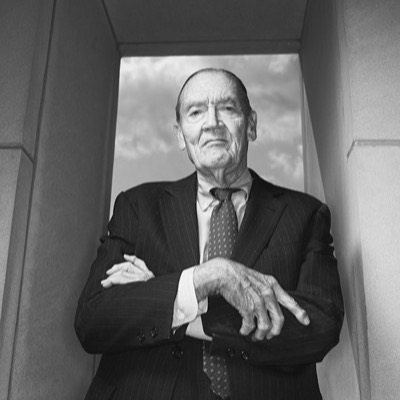
In their words
“I take the market efficiency hypothesis to be the simple statement that security prices fully reflect all available information.”
Context: Fama's statement of the efficient-market hypothesis, the idea behind the case for index funds.
“A blindfolded monkey throwing darts at a newspaper's financial pages could select a portfolio that would do just as well as one carefully selected by experts.”
“Irrational exuberance is the psychological basis of a speculative bubble.”
“Do not look for the needle in the haystack. Just buy the haystack.”
Strategies that put this into practice
A philosophy is what an investor believes. These are the procedures people run on the strength of it.
Related guides
Related concepts
Useful tools
Markets and hubs
Investor comparisons
Related philosophies
Frequently asked questions
What does market efficiency actually claim?
The proposition that prices reflect the information available about an asset, so acting on publicly known information is unlikely to give a durable advantage. Eugene Fama gave it its standard form in 1970, separating it into weak, semi-strong and strong versions.
Does it mean prices are correct?
No, and this is the most common misreading. It says prices reflect what is known, not that what is known is complete or that the resulting price is right. A price can be a poor estimate of value and still be the best available summary of current information.
Why is market efficiency so hard to test?
Any test of market efficiency also tests the model used to define what a correct price would be. Because the two cannot be separated, a result that looks like a market failure may instead be a failure of the pricing model. Fama identified this himself.
Has the theory been disproved?
No, and it has not been confirmed either. Momentum remains unexplained, prices move more than fundamentals justify, and the 2013 Nobel Prize was shared between researchers on opposite sides of the question. Treating it as settled in either direction misrepresents the evidence.
What is factor investing?
Tilting a portfolio toward measurable characteristics that have historically related to returns, such as company size or the ratio of book value to market price. It is framed as taking a known and compensated exposure rather than as identifying mispriced securities.
Get smarter about investing
Clear market insights, useful tools, and beginner-friendly investing education.
Educational content only. This page explains how an investing approach works and where it falls short. It is not a recommendation to adopt it, not investment advice, and not a claim that any approach suits your circumstances.