
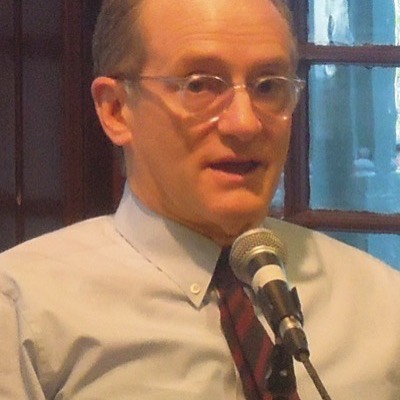
Nassim Nicholas Taleb
Author of The Black Swan and Antifragile
Born 1960
Writes about rare, high-impact events and argues that many financial models understate the likelihood and cost of extreme outcomes.
Biography
Nassim Nicholas Taleb is a writer and former options trader, born in Amioun, Lebanon in 1960, whose subject is what happens at the edges of a distribution. His argument is that the events which determine long-run outcomes are precisely the ones standard models treat as too unlikely to matter, and that this is not a small calibration error but a structural one.
He spent roughly two decades as a derivatives trader before turning primarily to writing, and the Incerto sequence sets out the position: Fooled by Randomness in 2001, The Black Swan in 2007, The Bed of Procrustes in 2010, Antifragile in 2012 and Skin in the Game in 2018. He is Distinguished Professor of Risk Engineering at the NYU Tandon School of Engineering.
The practical form of the argument is not forecasting. Taleb is explicit that rare events cannot be predicted, and that trying is the error. What he proposes instead is arranging exposure so that being wrong is survivable and being right is not capped, which is a question of position rather than of foresight.
Career timeline
- 1960Born in Amioun, Lebanon.
- 1980sBegins a career as a derivatives trader.
- 1998Completes a PhD at the University of Paris (Dauphine).
- 2001Publishes Fooled by Randomness.
- 2007Publishes The Black Swan.
- 2012Publishes Antifragile.
- 2018Publishes Skin in the Game.
How he approaches uncertainty
Taleb separates domains where outcomes are bounded and averages are meaningful from domains where a single observation can dominate the entire sample. Human height belongs to the first; market returns and book sales belong to the second. His central complaint is that tools built for the first are routinely applied to the second, which makes the resulting risk estimates confidently wrong.
From that follows a rejection of prediction as the organising activity. If the decisive events are rare and unforecastable, the useful question is not what will happen but what would survive. He argues for asymmetric exposure: arrangements where the downside is capped and known while the upside is not, so that being wrong repeatedly remains affordable.
The third strand is accountability. Skin in the Game argues that forecasts and advice carry weight only when the person offering them bears a share of the consequences, and that much financial and institutional advice fails this test.
Key ideas
Tap any idea to expand a plain-English explanation, why it matters, and where to learn more.
Black swans
Rare, high-impact events that are rationalised as predictable only after they occur.
If the outcome is dominated by events outside the model, then a model that fits the ordinary period is not reassuring.
A risk estimate calibrated on calm years says little about the year that matters.
Fat tails
In many financial series, extreme observations occur far more often and matter far more than a normal distribution implies.
It undermines risk measures that assume mild randomness, because the rare case carries most of the total effect.
A small number of days account for a disproportionate share of a long-run market outcome.
Antifragility
A property beyond robustness: some arrangements gain from disorder rather than merely withstanding it.
It reframes the goal from resisting shocks to being positioned so that shocks are useful.
Holding cash during a fall converts volatility from a threat into an opportunity to act.
Survival before optimisation
A strategy with a small chance of total loss is not comparable to one without it, whatever the averages say.
Expected-value reasoning breaks down when one branch removes you from the game entirely.
Leverage that is efficient in ordinary conditions can end a position permanently in an unusual one.
Major contributions
- Popularised the black swan as a term for rare, high-impact, retrospectively rationalised events.
- Introduced antifragility as a property distinct from robustness and resilience.
- Argued sustainedly that financial risk models understate the frequency and cost of extreme outcomes.
- Made skin in the game a widely used standard for judging advice and forecasts.
- Wrote the Incerto sequence, which brought these arguments to a broad readership.
Major successes
- Published The Black Swan in 2007, which became one of the most widely read books on risk and uncertainty.
- Holds the position of Distinguished Professor of Risk Engineering at the NYU Tandon School of Engineering.
- Completed roughly two decades as a derivatives trader before writing full time.
- Published academic work on fat-tailed distributions and the limits of standard statistical estimators.
Important books
- Fooled by Randomness2001
On the role of chance in outcomes and the tendency to mistake luck for skill, particularly in markets.
- The Black Swan2007
The central statement of the argument about rare, high-impact events and the limits of prediction.
- Antifragile2012
Develops the claim that some systems gain from disorder, and argues for arranging exposure accordingly.
- Skin in the Game2018
Argues that advice and forecasts carry weight only when the person giving them shares the consequences.
Influence on investors
The vocabulary spread further than the argument. Black swan entered general use after 2008 as shorthand for any severe surprise, often applied loosely to events Taleb would say were foreseeable in kind if not in timing.
Within investing, the durable contribution is the emphasis on tail risk and survivability: judging a strategy by what happens in its worst case rather than by its average, which sits alongside rather than against the diversification framework.
Criticisms and debates
A balanced view includes the main criticisms and open debates, presented neutrally.
- Critics argue the core insight is not new, and that Frank Knight and others had distinguished measurable risk from genuine uncertainty long before.
- Tail-hedging strategies inspired by the argument can cost money for extended periods, and their long-run value after those costs is disputed.
- His combative public style has drawn criticism, and some argue it obscures the substance of the technical work.
- The black swan label is applied so broadly in practice that it is often used for events that were well within historical experience.
- Some statisticians accept the fat-tails point while arguing that his critique understates how far standard practice already accounts for it.
Lessons for investors
Plain-English takeaways. Context for learning, not advice to buy or sell anything.
- 1Judge a strategy by its worst plausible outcome, not only by its average.
- 2Treat any arrangement with a small chance of total loss as different in kind from one without it.
- 3Expect models calibrated on calm periods to say little about the period that matters.
- 4Prefer positions where being wrong is affordable and being right is not capped.
Notable quotes
“Absence of evidence is not evidence of absence.”
“Antifragility is beyond resilience or robustness. The resilient resists shocks and stays the same; the antifragile gets better.”
“We are much better at doing than we are at understanding.”
Frequently asked questions
Who is Nassim Nicholas Taleb?
Nassim Nicholas Taleb is a writer and former derivatives trader born in Lebanon in 1960, Distinguished Professor of Risk Engineering at NYU Tandon, and the author of the Incerto sequence including The Black Swan.
What is a black swan?
A rare, high-impact event that was not anticipated and is rationalised as predictable afterwards. Taleb's point is that such events dominate long-run outcomes while sitting outside most models.
What does antifragile mean?
A property beyond robustness. A robust thing withstands a shock unchanged; an antifragile arrangement is positioned so that disorder improves its situation.
What are fat tails?
Distributions in which extreme observations are far more common and consequential than a normal distribution implies, which is characteristic of many financial series.
Does he recommend predicting crashes?
No. He argues explicitly that rare events cannot be forecast and that attempting it is the mistake. His emphasis is on arranging exposure so that being wrong remains survivable.
What are the main criticisms of Taleb's argument?
That the distinction between risk and uncertainty predates him, that tail-hedging can be costly over long stretches, and that the black swan label is now applied to events well within historical experience.
Related quotes
Other people in the library writing on the same themes.
Related guides
Related concepts
Related people
Build your investing system
Turn what you are learning into a repeatable process for researching investments, setting your rules, building your portfolio, and navigating markets.
Explore Money Masters OSGet smarter about investing
Clear market insights, useful tools, and beginner-friendly investing education.
Educational content only. This is a neutral summary compiled for learning. It is not an endorsement, not investment advice, and not a claim that this person is always right. Mentioning someone here does not imply they are affiliated with Money Masters Media.