
Ray Dalio vs Howard Marks
Overview
Both men built large firms around the observation that markets move in cycles driven partly by credit and partly by psychology, and both are unusually willing to publish their reasoning. The difference is what they do with the observation.
Dalio's answer is structural: write the rules down, encode them, and build a portfolio that does not require knowing which environment arrives. Marks's answer is judgmental: read where the market currently sits and adjust how aggressive you are, without claiming to know when it turns.
Quick comparison
| Dimension | 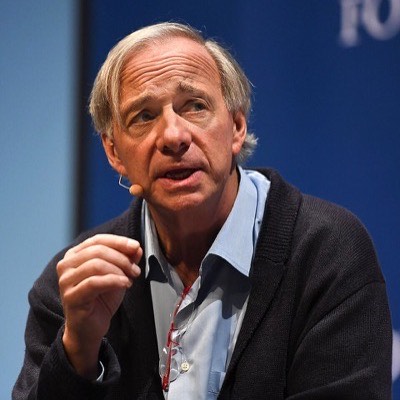 Ray Dalio Ray Dalio | 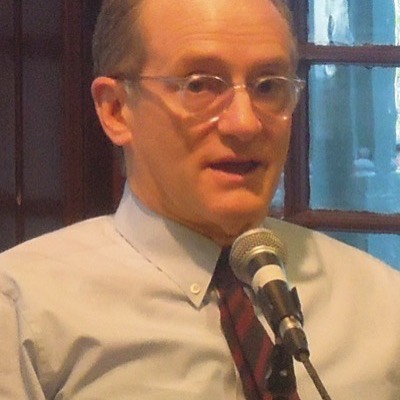 Howard Marks Howard Marks |
|---|---|---|
| Investment philosophy | Diversify across economic environments rather than predicting which occurs. | Read the present temperature of the market and calibrate against it. |
| Risk philosophy | Risk is concentrated exposure to one economic environment. | Risk is the probability of permanent loss, highest when it feels lowest. |
| Valuation approach | Secondary. Asset behaviour under economic conditions matters more. | Central, expressed as what you are being paid to accept a given risk. |
| Portfolio construction | Balanced by risk contribution across asset classes, not by capital. | Concentrated in credit opportunities when the cycle offers them. |
| Diversification | The central mechanism, and the reason the approach exists. | Useful, but not a substitute for demanding a good price. |
| Market timing | Explicitly avoided by construction. | Avoided as prediction, embraced as calibration. |
| Economic beliefs | A detailed mechanical model of debt cycles and how they resolve. | Cycles as psychology and credit availability rather than as a machine. |
Scroll the table sideways on a narrow screen. Each dimension is explained in full below.
Investment philosophy
Diversify across economic environments rather than predicting which occurs.
Read the present temperature of the market and calibrate against it.
Dalio's all-weather thinking treats the future as genuinely unknowable and builds a portfolio balanced across growth and inflation outcomes. Marks agrees the future is unknowable but argues the present is observable, and that observing it is enough.
Risk philosophy
Risk is concentrated exposure to one economic environment.
Risk is the probability of permanent loss, highest when it feels lowest.
Dalio's definition is structural and addressed by balancing assets that respond differently to growth and inflation. Marks's is behavioural and addressed by demanding more compensation when everyone else has stopped asking for any.
Valuation approach
Secondary. Asset behaviour under economic conditions matters more.
Central, expressed as what you are being paid to accept a given risk.
Marks came up through high-yield and distressed credit, where the analysis is entirely about whether the compensation covers the chance of not being repaid. Dalio's framework is about correlation and environment rather than about the price of an individual security.
Portfolio construction
Balanced by risk contribution across asset classes, not by capital.
Concentrated in credit opportunities when the cycle offers them.
Risk parity allocates so that each asset contributes similar risk rather than similar money. Oaktree does close to the opposite, holding capital back and then committing heavily into distress when prices dislocate.
Diversification
The central mechanism, and the reason the approach exists.
Useful, but not a substitute for demanding a good price.
Dalio has described finding uncorrelated return streams as the closest thing to a free lunch in investing. Marks treats diversification as sensible housekeeping while insisting the real protection is what you paid.
Market timing
Explicitly avoided by construction.
Avoided as prediction, embraced as calibration.
The all-weather idea exists so that timing is unnecessary. Marks does adjust exposure, but on where the market currently is rather than on where he thinks it is going, a distinction he is careful to maintain.
Economic beliefs
A detailed mechanical model of debt cycles and how they resolve.
Cycles as psychology and credit availability rather than as a machine.
Dalio has published an explicit template for how long-term debt cycles unfold. Marks is deliberately less systematic, emphasising that the shape repeats while the specifics never do.
Famous books
- Principles: Life and Work2017Ray Dalio
The book that collected the decision rules he had written for himself and for Bridgewater, along with an account of how they came out of his own mistakes.
- Principles for Navigating Big Debt Crises2018Ray Dalio
A study of debt crises across history, arguing they follow a recognisable sequence. Released free alongside the print edition.
- Principles for Dealing with the Changing World Order2021Ray Dalio
Extends the cycle framework to reserve currencies and the rise and decline of leading economies, over much longer spans than the earlier books.
- The Most Important Thing2011Howard Marks
Assembled from two decades of memos and organised around the ideas he treats as non-negotiable, with risk and second-level thinking at the centre. Its structure is unusual: each chapter is called the most important thing, which is his way of saying that no single idea works alone. The annotated edition adds commentary from four other investors, including Joel Greenblatt and Seth Klarman, arguing with him in the margins. It became the standard introduction to thinking about risk as something other than volatility.
- Mastering the Market Cycle2018Howard Marks
On reading where a market currently sits between fear and enthusiasm, and adjusting exposure without claiming to know when the turn arrives. It is more repetitive than the first book and more practical, working through credit conditions, investor psychology and valuation as separate readings of the same cycle. The central claim is modest and easy to miss: you cannot forecast, but you can calibrate.
Famous quotes
Ray Dalio“Pain plus reflection equals progress.”
“He who lives by the crystal ball will eat shattered glass.”
Howard Marks“Risk means more things can happen than will happen.”
“You cannot predict. You can prepare.”
Biggest successes
- Founded Bridgewater Associates in 1975 out of his apartment and built it into one of the largest hedge funds in the world.
- Launched the All Weather approach in 1996, an early attempt to balance a portfolio by risk contribution rather than by capital weight.
- Published How the Economic Machine Works as a free video, which turned a professional framework into a widely used teaching resource.
- Has published investor memos continuously since 1990. The value is in the format: because each one is dated and public, his reasoning can be checked against what actually happened, which is a standard almost nobody else in the industry has accepted for three decades.
- Wrote a memo in January 2000 arguing that technology valuations had detached from any defensible basis, shortly before the market turned. It mattered because it was specific, timed and on the record, and it converted the memos from a private habit into required reading.
- Co-founded Oaktree Capital Management in 1995 with five colleagues, built around a mandate that put avoiding loss ahead of maximising return. Founding a firm on an explicitly defensive premise, and raising money for it, was not an obvious commercial proposition at the time.
Biggest criticisms
A balanced view includes the main criticisms of each approach, presented neutrally.
- Macro frameworks can be hard to apply in practice, since timing economic shifts is difficult.
- Risk-parity strategies can struggle when stocks and bonds fall at the same time, as in some recent periods.
- Some argue that broad cycle models explain the past better than they predict the future.
- The framework may not be actionable. Critics argue that knowing a market is expensive tells you nothing about when it stops being expensive, so an investor who acts on the reading can be early by years, which is indistinguishable from wrong while it is happening. Supporters answer that he never claims otherwise and prescribes calibrating exposure rather than exiting. The 2000 memo is the strongest evidence for him and also illustrates the problem, since a similar caution expressed two years earlier would have been costly.
- A defensive style has a real price in rising markets. Critics note that an approach organised around avoiding loss will lag during long expansions, and that most years are expansions. Supporters reply that the arithmetic of compounding rewards avoiding severe losses more than capturing every gain, and that credit investors face genuinely asymmetric outcomes. Both are true, and the honest framing is that this is a trade-off matched to a temperament rather than a free lunch.
- The memos are hard to score. Critics point out that writing which emphasises uncertainty and avoids specific predictions is close to unfalsifiable, and that readers remember the calls that landed while the hedged passages leave no trace. Supporters counter that the memos are dated, public and unedited, which is more accountability than the industry norm. What can be said is that the record is genuinely open to inspection and genuinely difficult to convert into a score.
Lessons investors can learn
Plain-English takeaways. Context for learning, not advice to buy or sell anything.
- 1Knowing you cannot forecast leads to two different sound answers: build something that does not need one, or read the present instead.
- 2Reading where a cycle stands tells you what you are being paid today, not when conditions will change.
- 3Balancing by risk contribution and balancing by capital are very different portfolios.
Who each approach suits
Readers interested in portfolio construction and in a systematic framework for thinking about how assets behave under different economic conditions.
Readers who want to think clearly about risk and pricing, and who prefer judgment supported by written reasoning to a model.
Common misconceptions
- The claim
Both are macro forecasters.
What is actually the caseNeither claims to forecast. Dalio builds portfolios that do not require a forecast; Marks reads current conditions and explicitly declines to say when they will change.
- The claim
Risk parity means low risk.
What is actually the caseIt means each asset contributes a similar share of portfolio risk, which typically involves holding more bonds and sometimes leverage. It is a balancing method, not a safety guarantee.
Frequently asked questions
What is the difference between risk parity and reading the cycle?
Risk parity is a construction rule that balances how much risk each asset contributes, so the portfolio does not depend on knowing which economic environment arrives. Reading the cycle is a judgment about current conditions used to adjust how aggressive to be. One removes the need for a view; the other forms one about the present.
Do Dalio and Marks agree on anything?
On a good deal. Both hold that the future cannot be forecast reliably, that credit conditions drive much of what happens, that investor psychology swings between extremes, and that most people take more risk than they realise near the top of a cycle.
What is the all-weather approach?
A portfolio built to hold up across different combinations of growth and inflation, by balancing assets that respond differently to each. The point is to avoid needing to know which environment is coming rather than to maximise return in any one of them.
Why does Marks emphasise credit so heavily?
Because he came up through high-yield and distressed debt, where the best outcome is simply being repaid. That forces the entire analysis onto what could go wrong, and he has said he would not think about risk the way he does had he stayed in equity research.
Can an individual investor use either approach?
Elements of Dalio's transfer, since balancing across asset classes is available to anyone through broad funds. Marks's asset class does not transfer, because distressed debt requires scale and legal resources, though his definition of risk and his habit of asking what is already in the price do.
Investing philosophies behind this debate
Schools of thought one or both of these investors are associated with.
Strategies these investors are associated with
What the disagreement looks like as an actual way of running a portfolio.
Related guides
Related concepts
Hubs and trackers
Read the full profiles
Related investors
More comparisons
Get smarter about investing
Clear market insights, useful tools, and beginner-friendly investing education.
Educational content only. This is a neutral comparison compiled for learning. It is not an endorsement of either approach, not investment advice, and not a claim that either person is always right. Mentioning someone here does not imply they are affiliated with Money Masters Media.